



















Looking at the Grades: How Hardware Specification Impacts a Commercial Door’s Life Cycle
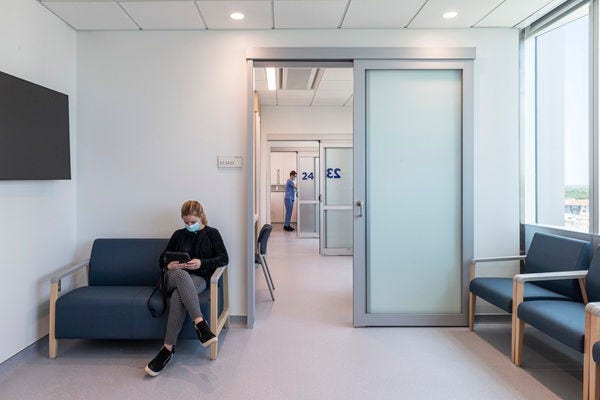
Determining a commercial door’s life cycle can be quite complex. A door’s weight, where it is located in a building, the type of building it is in, how it operates and more all play a part in the wear-and-tear the full door system will experience.
That said, the Builders Hardware Manufacturers Association (BHMA) has developed testing standards that establish quantifiable benchmarks for strength, durability and performance. They help project stakeholders select products that will perform as intended in an application over their service lives. While past blogs have explained what BHMA is and how BHMA certification sets a bar for quality, it is important to understand the details of these standards.
By knowing the BHMA hardware grades, specifiers can make more confident decisions in opening design, which can lead to longer commercial door life cycles.
What is the BHMA grading system?
Most BHMA standards operate on a tiered grading system. Each BHMA hardware grade tests products to different opening cycles and abuse scenarios. These levels offer specifiers and facility managers more comprehensive data on the durability and strength limits of the products within their buildings. As a result, these professionals can find door hardware that meets baseline performance standards for a given application.
For example, there may be an instance in which a project team is building an oversized door system for an application that experiences heavy traffic as well as a door system that is a standard size and is in a low traffic area of the built environment. The hardware for these two door systems would not necessarily need the same level of strength and durability to provide long-term value. BHMA hardware grades help guide teams in choosing appropriate components for both types of installations.
What do the grades of BHMA mean?
BHMA hardware grades are usually tiered across three levels. Grade 1 represents the most stringent requirements. Hardware certified to Grade 1 will often have undergone 500,000 (or more) opening cycles, withstood the pull test, and passed other, component-specific abuse tests to assure it meets the rigorous demands of high-use areas and heavier-than-average door systems. Components certified to this grade can also contribute to longer commercial door service lives.
Grade 2 offers a balance between strength and cost-efficiency. BHMA hardware graded to this level do not meet the same levels of performance as Grade 1 but will provide reliability and security in standard applications like offices, retail stores and light industrial facilities. The final tier, Grade 3, delivers a baseline level of performance. This grade is often reserved for hardware intended for residential applications and is not appropriate for most commercial door systems.
Do BHMA grades only pertain to door components?
The BHMA mostly creates component-based standards, but the association also has some integrated door system standards. For example, A156.32 Integrated Swinging Door Opening Assemblies and A156.43 Integrated Sliding Door Openings Assemblies grade full door systems based on their performance to indicate suitability in various applications—much like BHMA hardware grades.
Doors with certification to integrated standards can offer specifiers more detailed projections of a commercial door’s service life. This is because the standards place grades based on a door’s size and weight as well as the other components that make up the full system. Further, it allows design teams to specify a single door instead of piece one together from multiple components.
While there are many swing door systems that meet A156.32 Integrated Swinging Door Opening Assemblies, there are much fewer sliding door systems that meet A156.43 Integrated Sliding Door Openings Assemblies
Collaborate with an experienced manufacturer to deliver long-term value
Even with certifications from BHMA, doors can be one of the most difficult aspects of the built environment to specify, especially in health care applications. That said, building professionals do not have to go about designing, specifying and installing openings all on their own.
For over 15 years, AD Systems has collaborated with project stakeholders on thousands of projects across the world to deliver flexible, space-efficient and durable door systems. In addition to a proven track record, AD Systems has an integrated sales team with Technical Glass Products and Unicel Architectural. As shown in the recently completed Altru Health System, this approach to specification streamlines design processes across the entire built environment.
Explore where AD Systems’ doors fit within the health care environment then contact us to learn more.
You May Also Like
Check out similar product solutions.
Read about our products in the real world.
See how our doors solve many challenges.




Want AD Systems in your inbox?
Sign up to receive product updates, news and information from Ives sent directly to your inbox.
Let us help.
Contact us today to talk about your project needs, or call us at 425.740.6011.



Ⓒ 2025 Allegion all rights reserved