


















Expert Q+A: How Do Commercial Sliding Doors with BHMA-Certified Hardware Deliver Value?
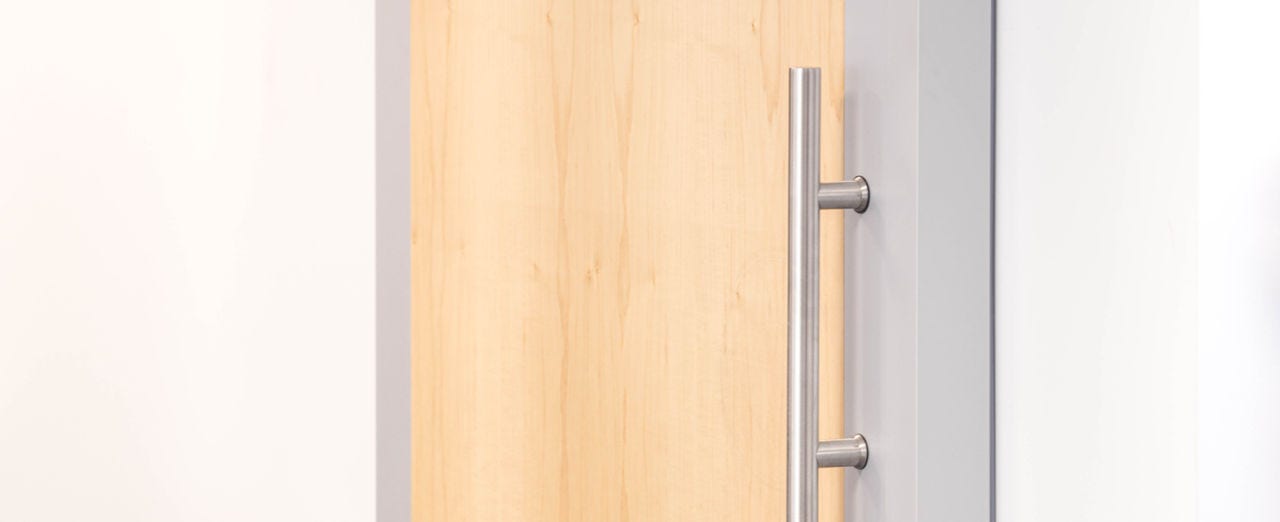
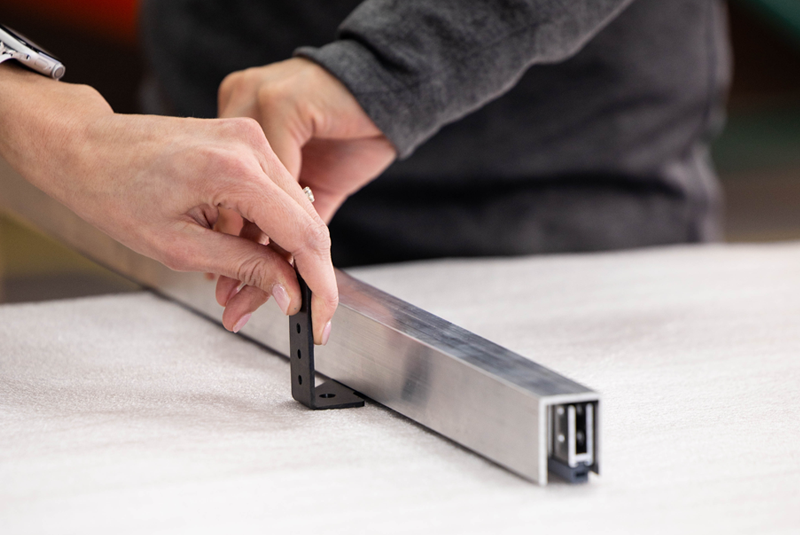
In commercial applications, the hardware in and around a door plays a crucial role in the opening’s ability to perform as intended over the course of its expected service life. From frames to closers to locks, hardware needs to be specified based on its usage. For example, a door closer in a high-traffic public building’s door will have different demands put on it than one in a low-traffic maintenance room’s door. The same principle applies to every hardware component on commercial sliding doors, where multiple moving parts must work together seamlessly to deliver measurable performance, maintain accessibility and egress and other building code requirements.
The criticality of having a complete system designed and tested to meet those requirements makes specifying the right integrated sliding door complex, especially given the wide range of products available. This is where a Builders Hardware Manufacturers Association (BHMA) certification can be valuable.
Diving deeper in this Q+A, Tysen Gannon, LEED AP, draws insights from over 15 years of experience in the industry to explain the value of using BHMA-certified products for architects when specifying door systems in their commercial projects.
Q: What is a BHMA certification?
A: To sideline the process of ensuring quality and performance of all the components of a door opening and to regulate the quality of products in the market, the BHMA developed a standardized system to grade products based on rigorous third-party testing for security and durability and finish. Backed by industry-leading standards, BHMA certification for hardware can help architects and specifiers compare products from different manufacturers, simplifying decision-making. It also empowers them to ensure that hardware components in door systems meet application-specific performance expectations and code requirements.
Q: Why is BHMA certification important for commercial sliding doors?
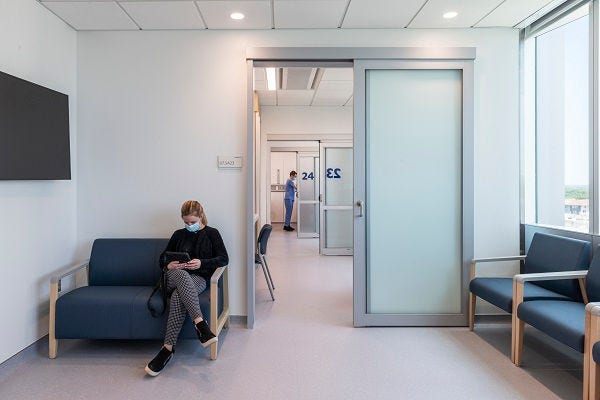
A: Often, commercial architects prioritize space optimization and aesthetics. To achieve such goals, these professionals often specify commercial sliding doors in health care facilities, offices and educational institutions. But with multiple openings throughout a facility, each requiring different performance specification, it can become challenging for architects and designers to track, evaluate and ensure durability across the board.
A BHMA certification simplifies this process. It acts as an essential quality assurance tool. When a commercial sliding door assembly is BHMA certified, it ensures that all the components are capable of withstanding daily wear and tear while meeting safety and accessibility standards. As a result, it gives design teams confidence in the system’s long-term performance and suitability for the application.
Specifying BHMA-certified products helps reduce the risk of code violations, callbacks or premature failure. To that end, these factors ultimately support the functionality, aesthetics and lifecycle expectations of modern commercial spaces.
Q: What do BHMA grades mean for architects and specifying teams?
A: The BHMA has a series of standards and criteria for a wide variety of hardware products, including locks, closers, exit devices and more. A majority of these standards define different product grades for a particular hardware—Grade 1, Grade 2 and Grade 3, based on their performance.
Typically, Grade 1-rated hardware is tested to withstand the highest number of cycles, making it ideal for heavy-use commercial applications. Grade 2-rated hardware has successfully endured the second-highest number of cycles, indicating its suitability for medium-duty commercial applications. Likewise, a Grade 3 qualification illustrates that the product is fit for light-duty use.
Because hardware specification depends on the expected use of a door, architects and designers can evaluate how many times a door is likely to be used throughout the day and select a corresponding BHMA-rated hardware for the commercial sliding doors in their project. Choosing hardware appropriate for the intended application can help ensure the door system’s durability and prolong its life cycle.
Q: Like BHMA-certified hardware, are there integrated door systems that can be specified?
A: Yes and no. Currently, there are standards in place that provide the framework for testing requirements for different types of integrated door systems. According to these standards, the entire assembly (including the door panel, hanging device and hardware) will undergo operational, cycle and abuse tests. For example, A156.32 Integrated Swinging Door Opening Assemblies establishes standards for swing door assemblies and A156.43 Integrated Sliding Door Openings Assemblies for sliding door assemblies. Similar to hardware grading, the doors are graded based on performance to indicate their suitability in various applications.
There are certain swing door systems in the market that have been successfully tested and certified as a complete assembly. However, there are no commercial sliding doors that have been tested as a complete system and achieved certification at this point in time.
Specifying the right hardware starts with finding the right manufacturer
Navigating hardware specifications to ensure that a door performs as intended can be one of the more challenging aspects of design. However, designers do not have to figure it out by themselves.
Manufacturers can support architects and design teams with the resources they need to make informed, confident specifications. For example, AD Systems has developed several online resources and design guides to help building professionals choose the right doors for their projects.
Likewise, with a knowledgeable team of experts, extensive and up-to-date guides and overviews of building requirements and other technical documentation, AD Systems supports design teams from specification through installation.
You May Also Like
Check out similar product solutions.
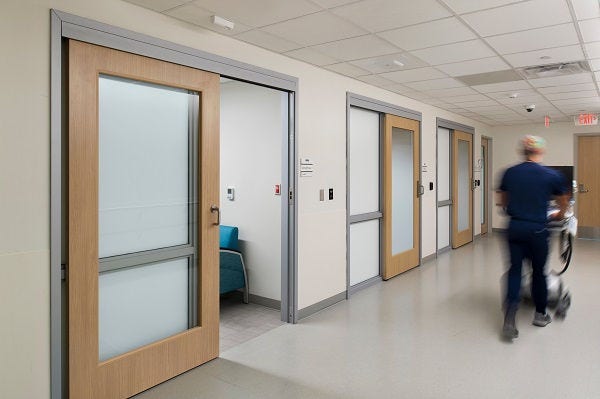
Read about our products in the real world.
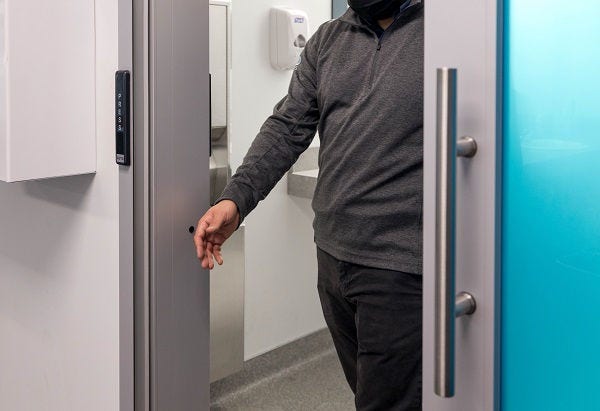
See how our doors solve many challenges.



Want AD Systems in your inbox?
Sign up to receive product updates, news and information from Ives sent directly to your inbox.
Let us help.
Contact us today to talk about your project needs, or call us at 425.740.6011.



Ⓒ 2025 Allegion all rights reserved