


















Interior Storefront Systems: Enabling Flexible Health Care Design
According to Gordian’s tracking data, the cost of health care construction has seen year-over-year increases since before 2022. With these rising costs, many project teams are looking toward flexible health care design to improve the immediate and long-term viability of these projects. Design flexibility helps medical facilities adapt to sudden changes in need and extend the service life of these buildings without requiring extensive renovations.
But what design strategies improve flexibility in hospitals?
There are many ways to facilitate a more flexible health care design, but door specification remains a cost-effective and efficient way of improving the ability of an interior to flex with occupant need. This can be especially true when designing interior storefront systems.
What are interior storefront systems?
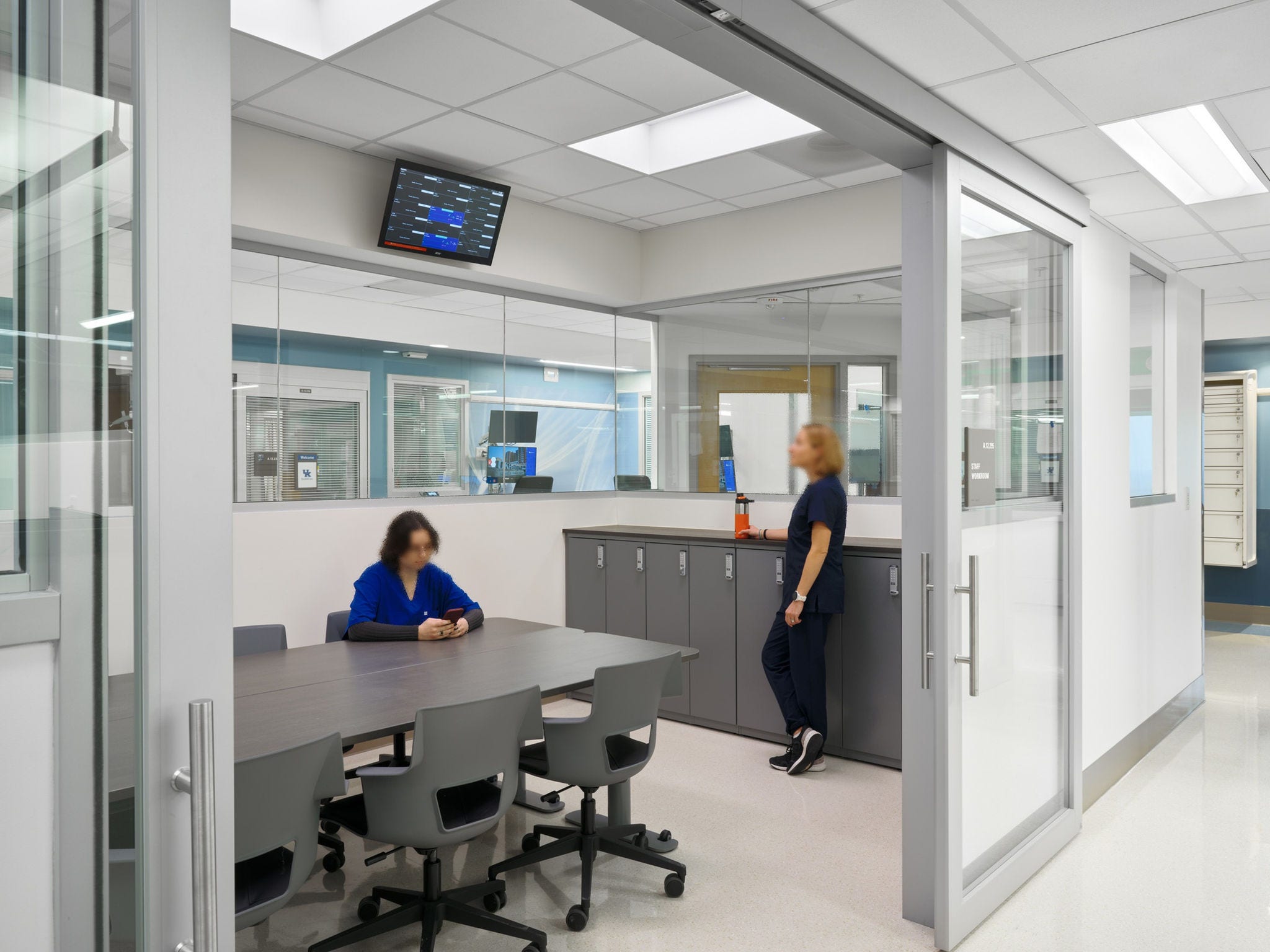
Interior storefront systems use glass lites and metal framing to create partitions. These design features can support safer and more acoustically enclosed nurse stations without compromising open sightlines. The combination allows medical providers to concentrate when necessary and to visually monitor patients always.
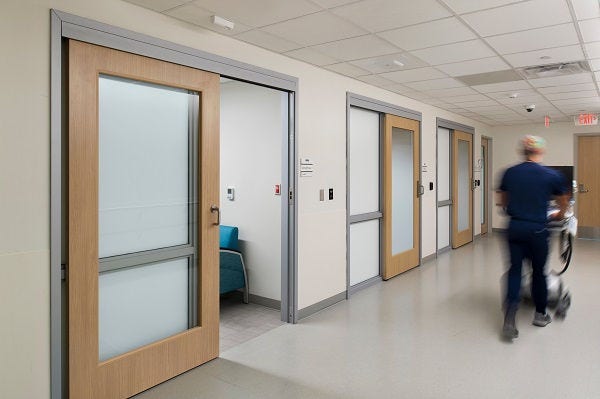
The design team behind the medical and cardiovascular intensive care units (ICUs) inside the University of Kentucky’s Albert B. Chandler Hospital understood these benefits when planning the department’s workstations. Expansive glazing was key to the design as it maintained sightlines across the floor to allow more streamlined coordination between providers. By featuring full-lites of glass, the commercial sliding doors used in the project maximized the impact of glass design while also maintaining a cohesive aesthetic between components of these assemblies.
Optimized interior storefronts support a more flexible health care design
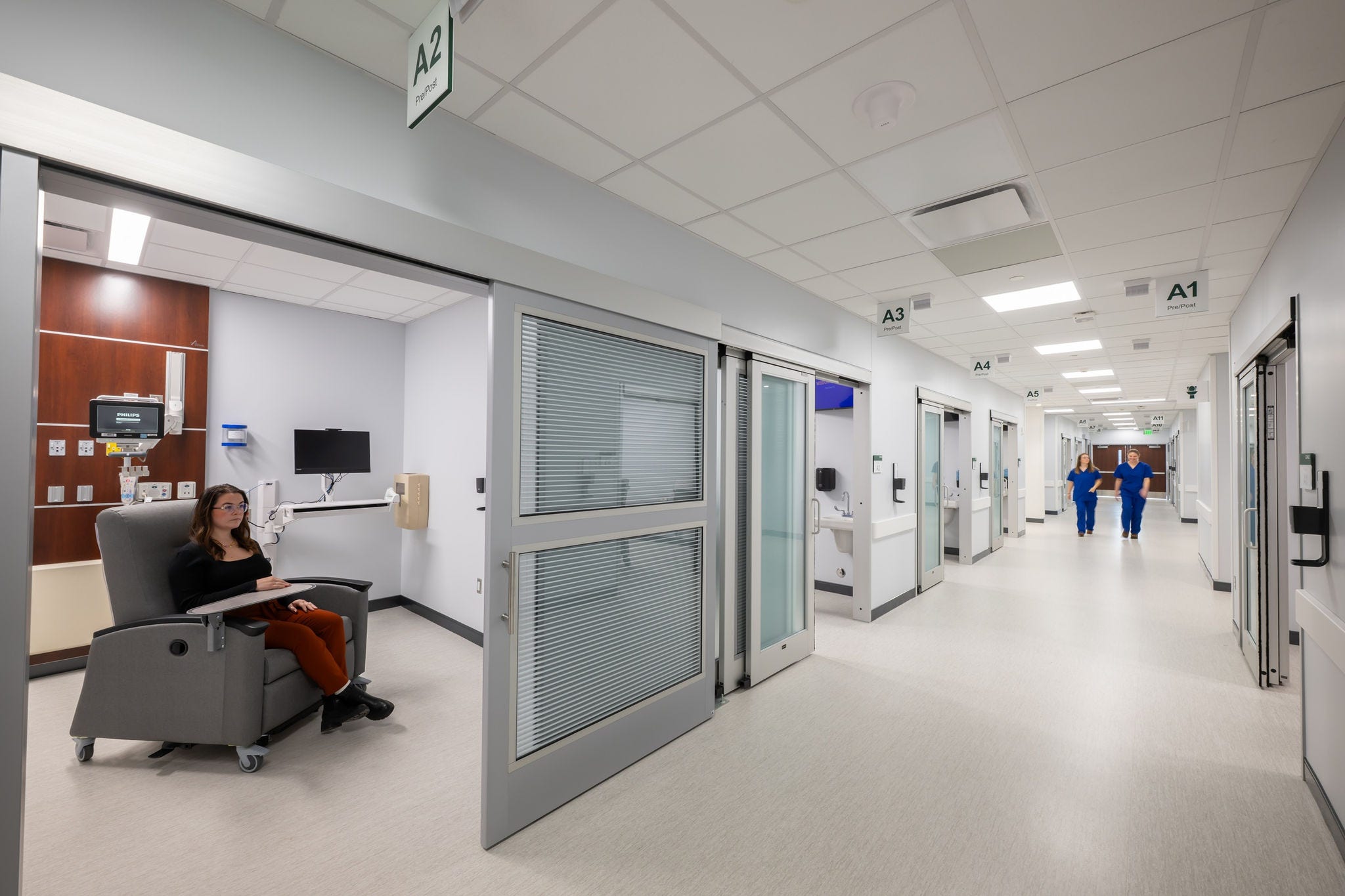
The commercial sliding glass doors used in the interior storefront systems at the Albert B. Chandler Hospital eliminated the need to plan for large swing arc trajectories and accessible clearances, saving up to 30 square feet per door. This resulted in a more efficient and more flexible health care design.
On the one hand, as Matt Nett, Associate from GBBN, the project’s architectural firm, explains, these doors help “maximize programming opportunities and flexibility in this space.” On the other, the visual openness and acoustic performance of these door systems allowed a more functional interior.
According to Dr. Ashley Montgomery-Yates, Senior Vice Chair of Medicine at University of Kentucky, balancing visual connection with acoustic privacy “was incredibly important for this project” and that the doors used in the interior storefront systems “met both the visual and acoustic goals” of the design.
Commercial sliding doors enable space-efficient and flexible storefronts
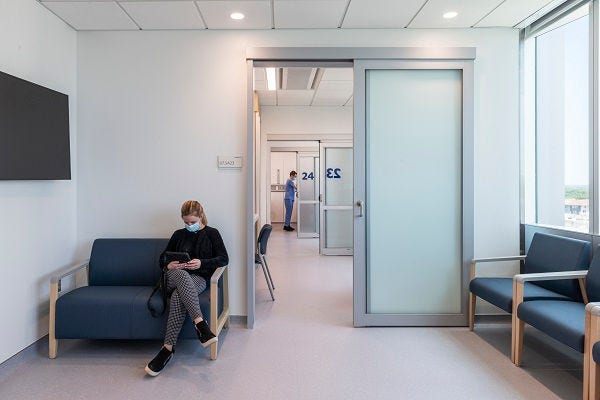
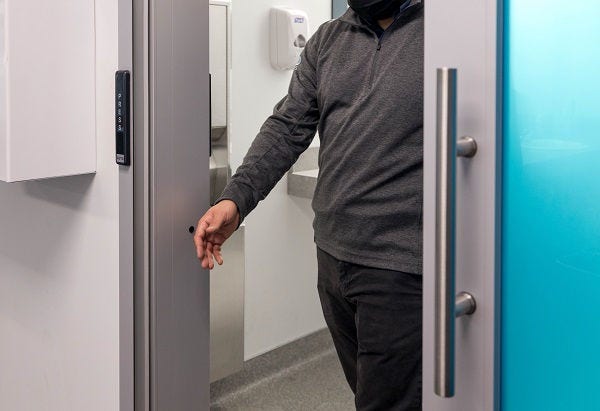
Because commercial sliding doors do not swing away from their frames or require a significant amount of extra space to accommodate approach and maneuvering clearances, they can streamline the design of interior storefront systems. Further, sliding doors like ExamSlide™ from AD Systems, offer drop-down and perimeter seals to achieve Noise Isolation Class (NIC) ratings of up to 39—meaning they block up to 39 decibels of sound. But these benefits only represent a fraction of the value sliding door systems can deliver.
These flexible openings can also:
· Balance connection and privacy with integrated louver systems
· Allow larger, more flexible openings
· Support occupant safety with impact-resistant glazing and anti-ligature hardware
· Improve security with locking hardware and automatic operators
A robust approach to flexibility goes beyond interior storefront systems
When contemplating strategies for flexible health care design, it is important to consider the full floorplan—from interior storefront systems to patient doors and beyond. To support project teams in achieving a more flexible health care design, AD Systems developed a project visualizer to demonstrate where flexible openings can be specified and their value in specific applications.
Just as this approach to design has many viable paths, there are several product options that can help teams facilitate more functional and flexible health care designs. Using an integrated approach to design, AD Systems helps project stakeholders find solutions to challenges in and beyond door specification.
Discover how this strategy can streamline your next health care project.
You May Also Like
Check out similar product solutions.
Read about our products in the real world.
See how our doors solve many challenges.



Want AD Systems in your inbox?
Sign up to receive product updates, news and information from Ives sent directly to your inbox.
Let us help.
Contact us today to talk about your project needs, or call us at 425.740.6011.



Ⓒ 2025 Allegion all rights reserved