


















The Complete Guide to Selecting the Right Automatic Door
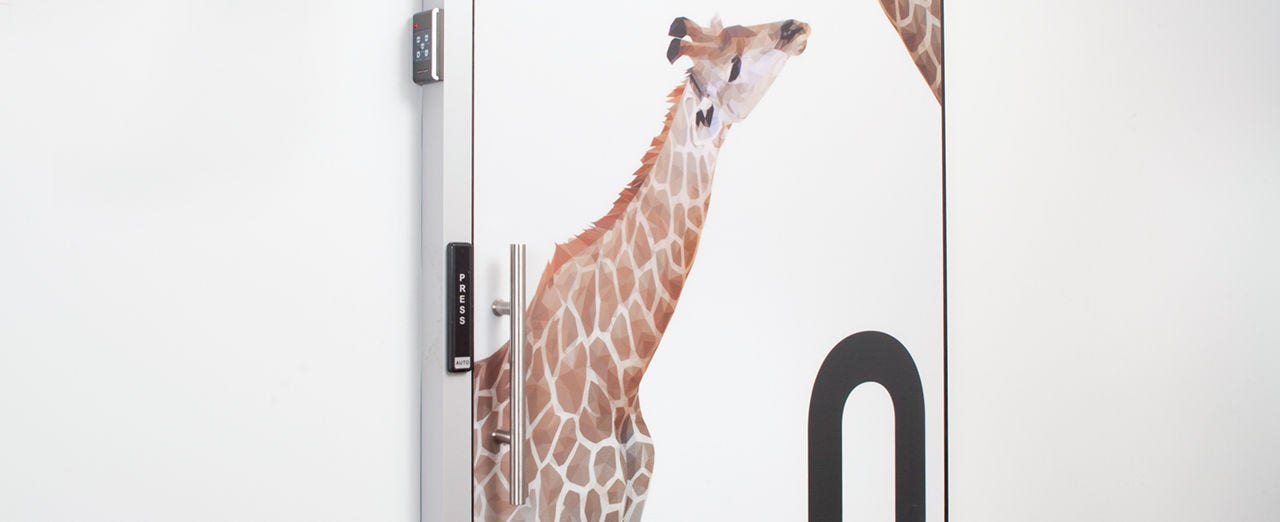
Automatic sliding doors solve several challenges in designing a more accessible and hygienic built environment. However, specifying the right system for an application often requires more decisions than manually operated doors.
But with guidance from proven manufacturers before and during the design phase, project teams can utilize automatic sliding door systems to create more secure and easier to navigate interiors for health care, commercial and many other occupancy types.
This guide explains the basics of interior automatic sliding doors and can be paired with other design resources to help architects and specifiers solve opening challenges more effectively and efficiently.
High-energy or low-energy: two types of automatic sliding doors
When selecting an automatic sliding door system for an opening, it is important to understand the two large categories of operators: high-energy and low-energy. These operator types impact the actualization of a door.
High-energy operators open and close with more force and speed. Further, they are often activated when a person steps into the door sensor’s field of vision. This type of automatic sliding door is best suited for high-traffic locations like entryways and well-traveled corridors in commercial projects.
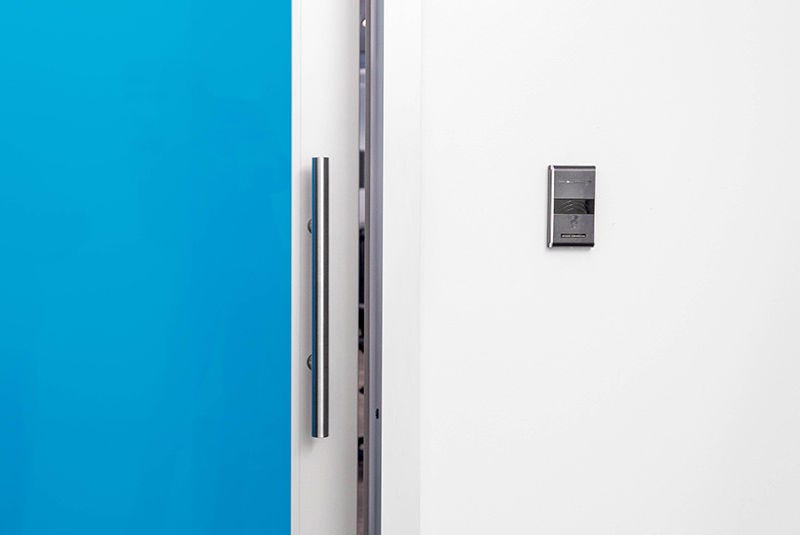
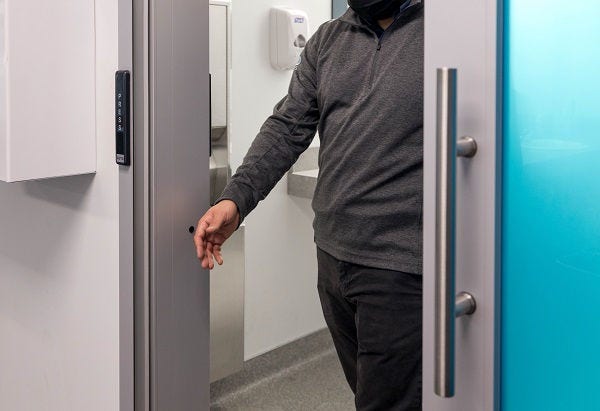
In contrast, low-energy operators open and close a door more slowly and with less force. Suited for low-traffic areas, these interior automatic sliding doors are often activated through a knowing act such as a push of a button, slide of a key card or a wave of the hand. Because they operate with less force, they do not require the same level of ongoing maintenance to ensure long-term functionality.
Access control options for interior automatic sliding doors
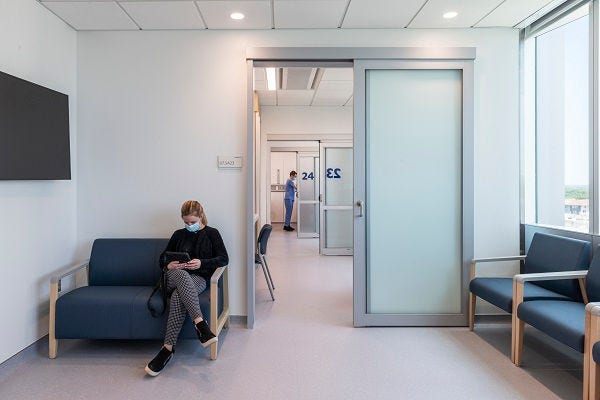
Automatic sliding doors reduce touchpoints throughout the built environment. On the one hand, this supports infection control and improved building hygiene, since door hardware represents one of the most touched surfaces inside a building. On the other, it can improve accessibility—especially for those who may have a risk of falling if they let go of their mobility aid.
In addition to accessibility, automatic sliding doors with low-energy operators, like AutoMotion™ from AD Systems, can enhance security. Their activation devices can tie into access control systems to limit who can open the door. This makes them uniquely suited for the security needs of pharmacy labs, medication rooms and other locations within a health care facility.
Meeting the moment: modern automatic sliding door design
Specifying the most appropriate operator and access control system is essential for a properly functioning automatic sliding door. However, it is not the only consideration. Project teams may also consider the look of a door system and how its design may contribute to other operational goals.
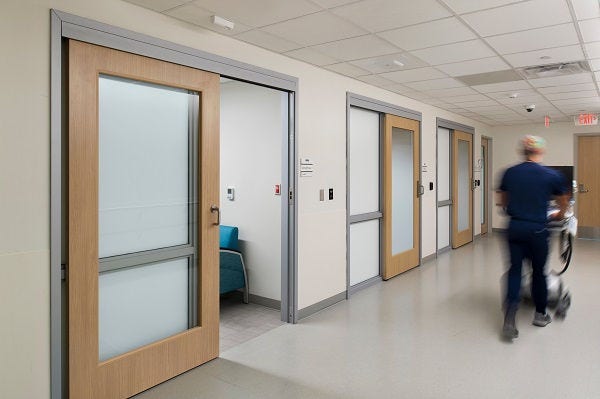
Modern automatic sliding door design allows these systems to be configured in single leaf or bi-parting options to meet the opening width and wall space needs of a project. Further, leading commercial automatic sliding doors can be designed with flush wood or laminate leaves, aluminum stile and rail with glazing, wood with glazing and other finish options. This helps design teams balance visual connection and privacy and maintain a cohesive design aesthetic with other opening systems.
Final takeaway for specifying commercial automatic sliding doors
While specifying automatic sliding doors may add a few more considerations to the process, they contribute multiple points of value across a wide range of commercial and institutional occupancy types. When they are paired with other space-efficient, flexible opening systems, automatic sliding doors can help project teams design more accessible, secure and hygienic buildings.
For projects that utilize multiple door systems, design teams can streamline the specification, delivery, installation and maintenance processes by collaborating with manufacturers with a proven track record and a wide range of opening solutions.
Contact AD Systems today to explore how multiple flexible door systems from a single source supplier can readily solve design and construction challenges.
You May Also Like
Check out similar product solutions.
Read about our products in the real world.
See how our doors solve many challenges.


Want AD Systems in your inbox?
Sign up to receive product updates, news and information from Ives sent directly to your inbox.
Let us help.
Contact us today to talk about your project needs, or call us at 425.740.6011.



Ⓒ 2025 Allegion all rights reserved