


















Doors for Schools: Are Commercial Sliding Doors Safe?
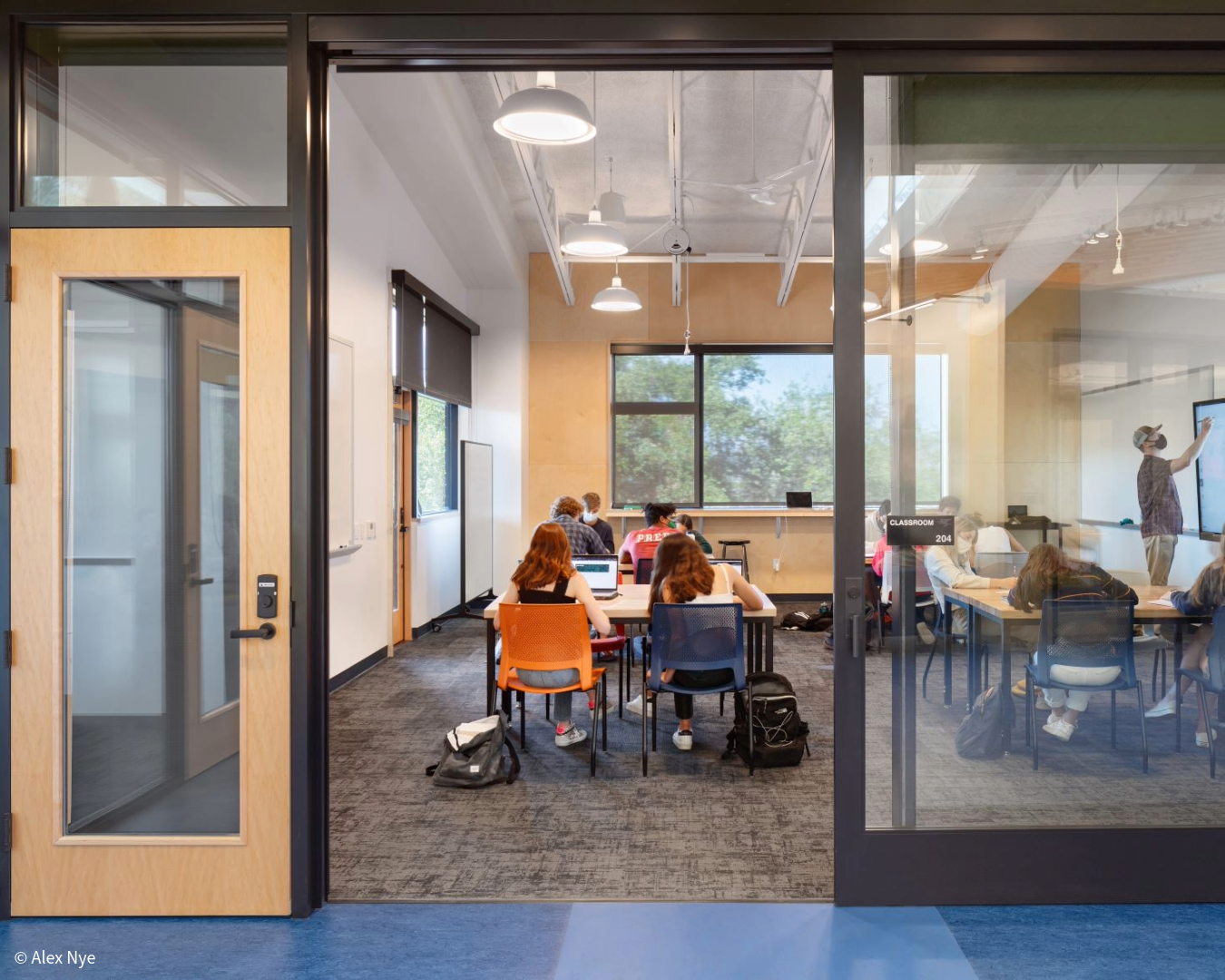
“Are commercial sliding doors suitable for schools?” is a common question from education-focused design teams—and for good reason. While sliding doors have seen a long history of use in residential projects, only relatively recently have manufacturers improved their design to meet durability goals for commercial applications.
With components that meet the Builders Hardware Manufacturer Association’s (BHMA) requirements for a Grade 1 designation, select commercial sliding doors can withstand the wear-and-tear typical of schools. Further, when these systems are designed with younger end-users in mind, they can further complement a robust approach to designing educational settings that are safe for all occupants.
The following outlines a few of the ways commercial sliding doors for schools can support occupant-centered designs beyond space-efficiency and accessibility.
Sliding doors for schools provide premium durability and safety
A crucial component of door safety in schools is an opening system’s ability to remain functional in normal wear-and-tear situations and to withstand abnormal abuse. Doing so mitigates the risk of injury for those operating a door.
While there are many metrics for determining the durability of commercial sliding doors for schools, a strong perimeter frame offers a distinct advantage. This part of the door system helps protect operational components, resist dislodgment and even protect walls from damage. In fact, the durability of AD Systems’ OfficeSlide™ sliding doors (in combination with locking hardware) helped the design team for John Diemer Elementary School meet project goals for a safer school design.
Commercial sliding doors for schools offer more than space-efficiency
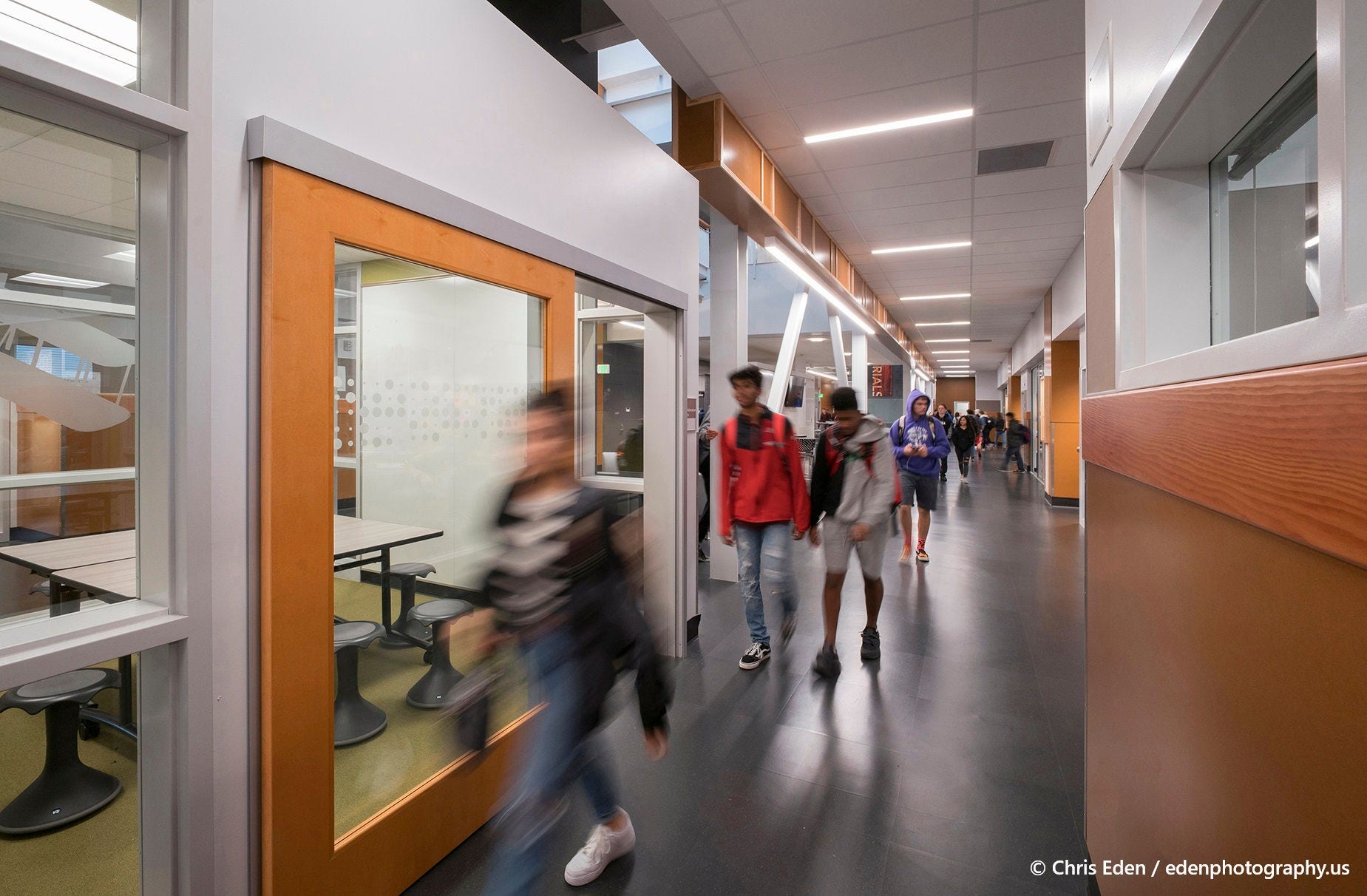
In addition to withstanding use and abuse, sliding doors used in schools can minimize injury risk due to their operation. Traditional swing doors, when installed in classrooms and breakout spaces, can open into corridors. During class changes and other times of hallway congestion, this can create bottlenecks as students try to leave class and pose a risk for unintentional collisions.
Commercial sliding doors glide along walls to maximize useable square footage and to sideline the potential for collisions. This aspect of sliding door design was key for North Creek High School (NCHS), located in Bothell, Washington. As Michael Stevens, project architect behind the project notes, “Without extra swing, you can do a lot more in a small space.”
These doors preserve corridor space between and during classes while offering flexibility for student and faculty use.
Soft closers improve the safe operation of sliding doors for school use
Beyond their design and operation, commercial sliding doors for schools can support student safety with soft closers. These systems, which come standard on sliding doors from AD Systems, keep doors from slamming shut by slowing the speed of a closing door as it approaches the closed position.
For many applications, this helps minimize damage and reduce noise caused by slamming doors. But soft closers can also reduce instances of fingers being caught between the door leaf and frame. As a result, sliding doors with soft closers can minimize injuries caused by swift closing doors. This can be especially important for oversized commercial sliding doors for schools, like the ones used in the Thacher School.
Are sliding doors safe for schools? The answer is yes
The above are just three ways commercial sliding doors can help maintain a safer school environment. These systems can be specified with fire ratings to support fire and life safety. They can also accommodate locks and automatic operators to ensure hazardous or sensitive areas are more difficult for students and visitors to access.
That said, specifying commercial sliding doors for schools entails more than planning for safety.
In addition to online resources, AD Systems can help guide design teams in selecting the most appropriate flexible opening door systems for their educational projects. Contact AD Systems today to learn more about the options available.
You May Also Like
Check out similar product solutions.
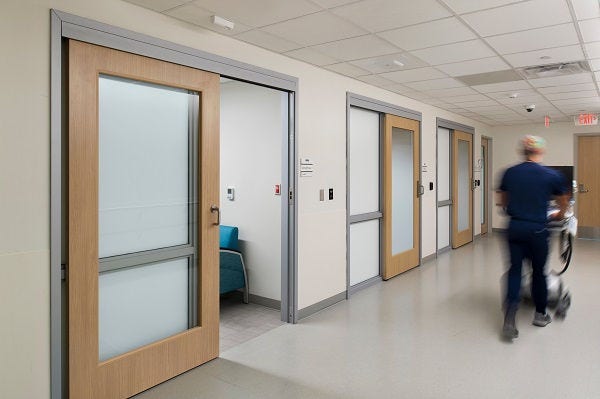
Read about our products in the real world.
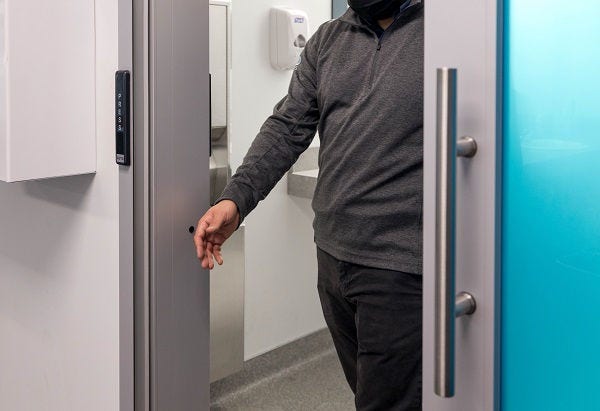
See how our doors solve many challenges.


Want AD Systems in your inbox?
Sign up to receive product updates, news and information from Ives sent directly to your inbox.
Let us help.
Contact us today to talk about your project needs, or call us at 425.740.6011.



Ⓒ 2025 Allegion all rights reserved