


















Key Considerations for Specifying Flexible Door Systems
Door systems play many roles in the built environment—from forming simple passages between rooms and corridors to striking a balance between openness and privacy. Because of this and because they are repeated throughout a building, doors can also be integral to achieving flexible design goals.
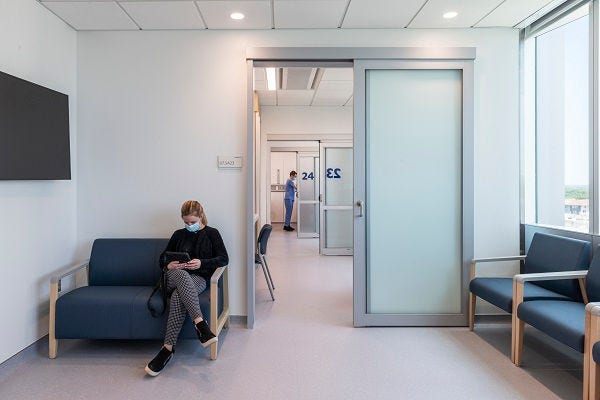
For example, space-saving doors, like sliding and other flexible opening solutions, can save up to 30 square feet per door by eliminating or significantly reducing swing arc trajectories. That said, flexible openings offer more than space optimization.
These doors can also be more versatile by opening wider than code-driven minimums without needing the associated approach and maneuvering clearances. As a result, flexible door systems can help projects more easily adapt to changes in occupant need, technology and use, which can extend their lifespans and offer a higher return on investment.
Selecting the right opening can be difficult no matter the design. This quick overview of space-saving door solutions can support project teams in selecting doors that will most benefit their builds.
What are the different types of flexible commercial door systems?
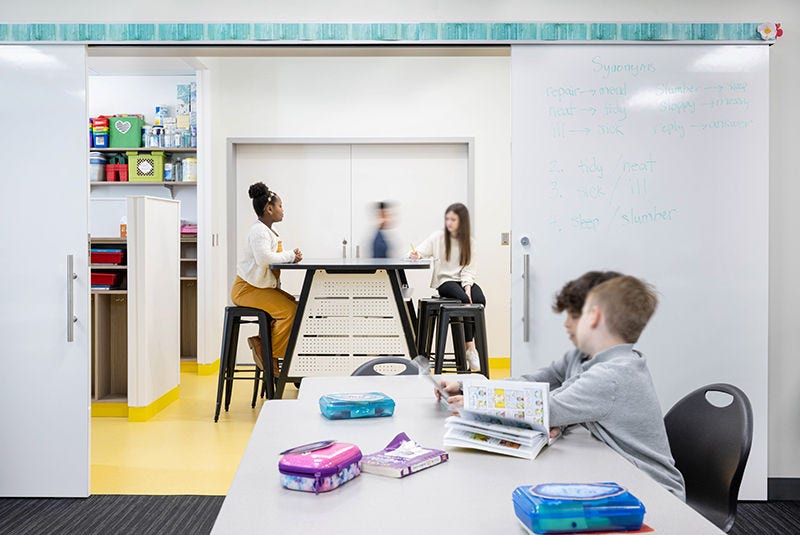
Flexible openings can vary significantly from system to system. This is because the qualities they need are highly dependent on the building’s intended use, their location and much more. For example, classroom doors will often need to meet standards listed in the Americans with Disability Act standards (ADA) and other code-driven requirements. In these applications, surface-mounted sliding door systems can meet these requirements while also supporting designs the facilitate safety, connection and collaboration.
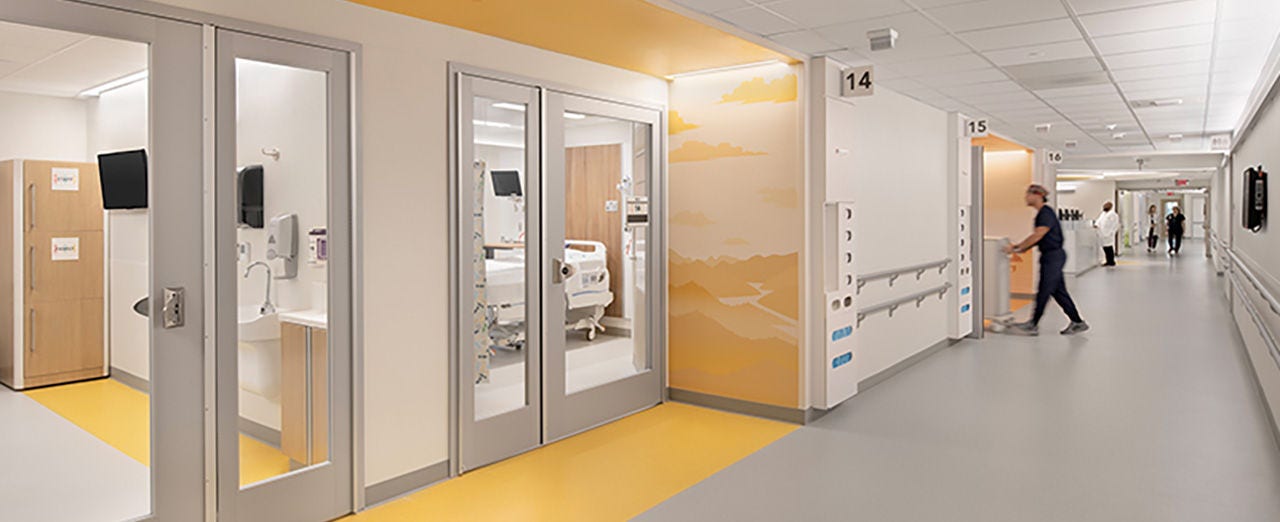
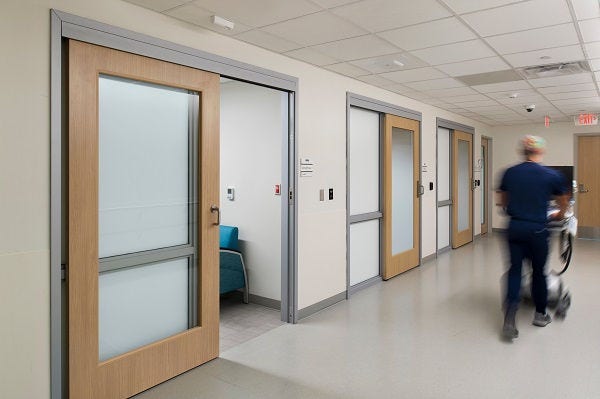
For patient room doors and other health care applications, designers can look to telescoping sliding doors to maximize opening sizes when wall space is limited. These solutions can also provide double-opening potential to support efficient exam room design. Designers can also specify flexible swing doors, like DualSwing™ from AD Systems, to meet requirements for egress doors while also allowing the easy passage of patient beds and large equipment.
Flexible openings can also be inset into a wall or incorporate automatic operators to meet various design goals and requirements throughout the built environment. Design guides from proven door manufacturers can support project teams in selecting the right space-saving door for an application.
How to choose a commercial door system for health care centers
Health care projects have to meet stringent requirements for accessibility and occupant safety. Further, project teams often try to optimize floorplans to incorporate more useable rooms. Finally, limiting sound transfer from nurses’ stations and common areas into patient rooms and respite spaces can support patients and providers alike.
Space-saving door solutions can help project teams plan for more rooms within a building’s footprint by reducing swing arc trajectories. For example, because the designers behind Pacific Medical Centers’ Providence Health’s Gately-Ryan Building in Renton, Wash., specified sliding doors, they were able to add an extra room for every 11 they had originally planned.
While maximizing useable space is important to ensuring medical centers can handle patient surges and other unexpected situations, it is also crucial that these interiors also create a restorative environment. For intensive care units (ICU), this often means limiting sound transfer. Flexible door systems from AD Systems can achieve Noise Isolation Class (NIC) ratings of up to 39, turning normal volume conversation on one side of the door to a low whisper on the other.
In fact, the Atrium Health Levine Children’s Hospital in Charlotte, N.C., uses three flexible opening systems from AD Systems to minimize alarm fatigue and support patient rest. Since all the doors were from the same manufacturer, they also contributed to a cohesive aesthetic.
How to choose a commercial door system for education settings
Education projects also have a set of unique requirements and design challenges that can make door specification difficult in some instances. Choosing the right door for education settings often requires project teams to consider student populations and a school’s pedagogical approach, since door systems can indirectly support student learning.
For example, the Thacher School’s mission focuses on teamwork, concern for others and challenging academic programming. The massive, full-lite sliding glass door systems used in the school reflect these values by balancing acoustic isolation with visual connectivity. Alayna Fraser, one of the architects behind the project, states, “AD Systems’ sliding doors are one of the few product lines we found that fit all our specifications for acoustic isolation and size of door.”
These doors open wide enough for adjacent rooms to function nearly as one large space. This allows teachers and students to configure the classroom in ways that benefit several types of lessons and learning objectives while always foregrounding community engagement.
In many educational settings, space-saving doors can contribute to welcoming designs that help facilitate both collaborative and individual learning.
Space-saving doors deliver value to multiple project types
Flexible door systems can help designers and specifiers create versatile interiors that readily adapt to changes in occupant need. This delivers value in the long-term by lengthening a building’s viable service life.
Further, space-saving door solutions that are engineered to be durable can minimize maintenance and repair costs, delivering value year after year. While this is especially beneficial in health care applications, it is also an asset in education, commercial and multi-family housing.
To help specifiers choose the right door system for their next project, AD Systems has a wealth of test data, CAD or Revit files and other data online. Request this information today.
You May Also Like
Check out similar product solutions.
Read about our products in the real world.
See how our doors solve many challenges.




Want AD Systems in your inbox?
Sign up to receive product updates, news and information from Ives sent directly to your inbox.
Let us help.
Contact us today to talk about your project needs, or call us at 425.740.6011.



Ⓒ 2025 Allegion all rights reserved