



















Hospital Patient Room Doors & Privacy Expectations
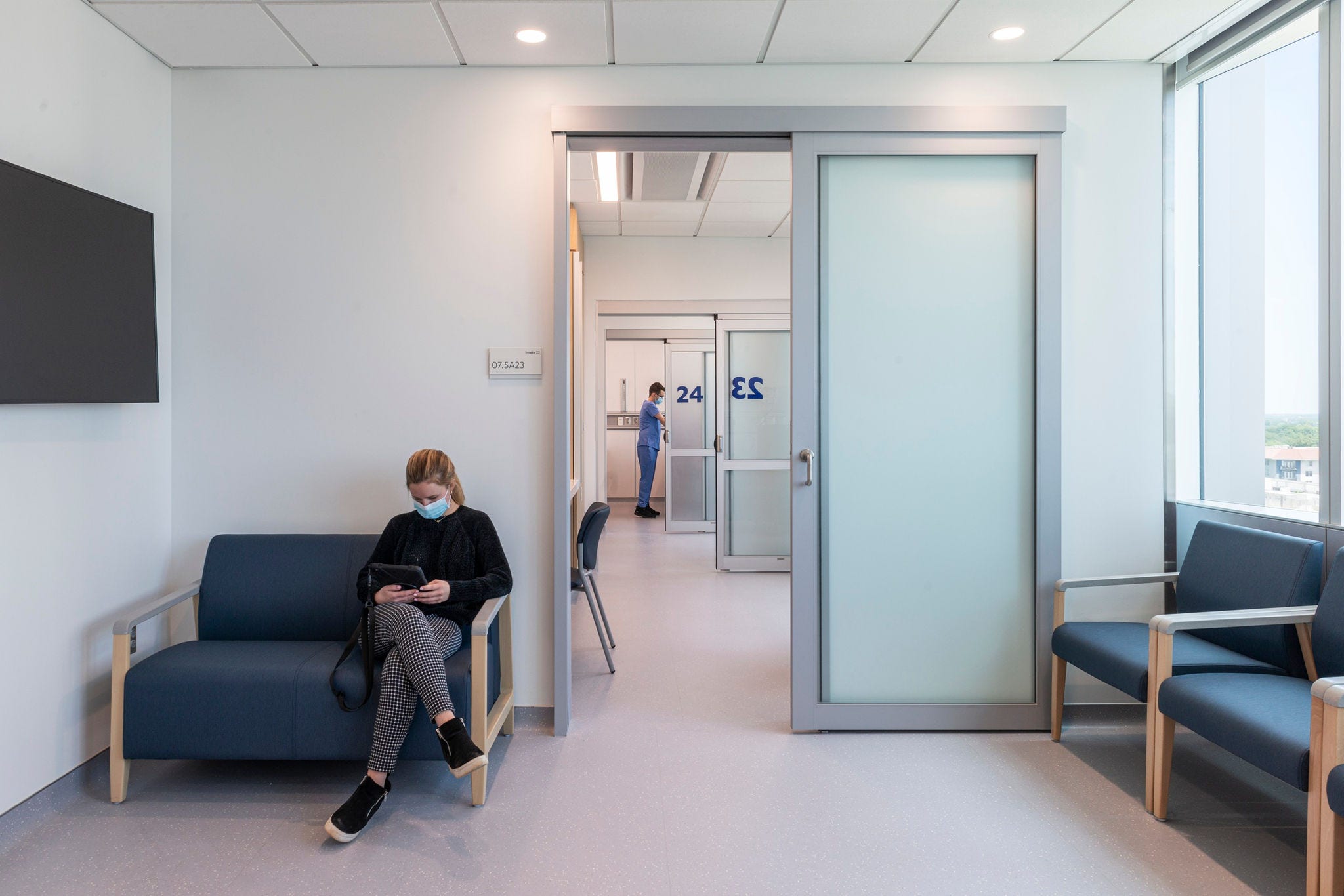
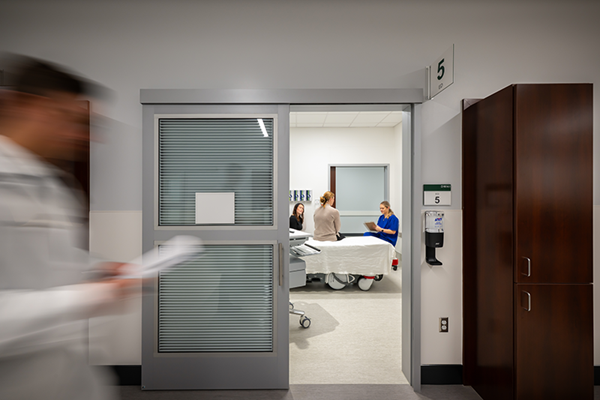
According to Erin Couch, Director of Architectural Standards and Design at Providence Health, doors and hardware can be some of the more challenging parts of health care projects to specify. She states, “There are many operational and opening width requirements to juggle.”
Along with these requirements, hospital patient room doors are increasingly being called to balance visual connection with privacy. In the past, designers may have tried to achieve this goal with curtains and other systems outside of the door. While these solutions can support an adaptable approach to patient privacy and visibility, they often come with drawbacks. For instance, curtains can be difficult or impossible to sanitize, leaving vulnerable patients at risk and inhibiting maintenance crew efficiency.
There have been advancements in creating privacy doors that can accommodate visual connection when needed and privacy when desired. Before diving into those advances, it is important to outline why privacy and visibility matter in health care design.
Hospital patient room doors contribute to functionality
Doors throughout a medical center impact a floorplan’s ability to support both patient and providers. For instance, hospital patient room doors that meet minimum opening width requirements may not be able to accommodate patient bed movement and could strain providers moving patients, or large equipment, between rooms. Flexible opening solutions allow wider openings when wall and floor space are at a premium, optimizing the environment for providers.
Likewise, when doors and other openings maintain a high level of visual connection, it can support patients through improved wayfinding and offer more ways to connect with providers. It can also minimize a sense of isolation providers may feel when workstations are decentralized.
Is there an expectation of privacy in a hospital room?
While visual connectivity remains a core component of several elements of modern health care design (from prospect-refuge to access to natural light), it is not the only quality to define an optimized health care environment. In addition to visual openness, privacy can also be central to a medical facility’s design, elevating positive patient experiences and outcomes and minimizing provider frustrations.
For patients, privacy doors to exam rooms can alleviate stress during procedures. They can also help support patient confidentiality by limiting sound transfer between rooms. For providers, having privacy when discussing sensitive information and conducting some procedures can ease tensions and lead to a more transparent patient-provider relationship—considerations that prompted Johns Hopkins and the Mayo Clinic to increase the percentage of private rooms to over 90 percent.
Designing privacy doors for patient rooms
When planning hospital patient room doors that balance visual connection with privacy, project teams have more options than before, especially when specifying full-lite commercial sliding glass doors. These options can include:
· Decorative patterns etched into the glass
Each option offers distinct value to a project, depending on use and need. For instance, the design team behind Altru Health System’s new North Dakota facility used sliding glass doors with integrated louvers to prioritize connectivity and comfort. These doors allow occupants in each room to customize the ratio of visual connection and privacy to maintain a flexible and functional environment. Because the louvers are hermetically sealed between two pieces of impact-resistant glass, they minimize infection risk while also contributing to premium sound attenuation as well. Because adjacent windows also use these louvers, they create a cohesive aesthetic between openings.
Exceed expectations with integrated approach to design
Hospital patient room doors can be a crucial element for creating interiors that support patients and providers, but they are not the only one. Just as the windows in the Altru Health System project imply, health care interiors require multiple systems that work together to facilitate design flexibility. The challenge is knowing how these systems will harmonize with each other or not.
AD Systems, Unicel Architectural, Technical Glass Products and other Allegion brands take an integrated approach to design that helps streamline specifications by providing accurate knowledge of several interrelated architectural systems. This approach also supports end-users by making maintenance and replacement more efficient.
Contact AD Systems today to learn more about specifying flexible openings and other systems essential to the built environment.
You May Also Like
Check out similar product solutions.
Read about our products in the real world.
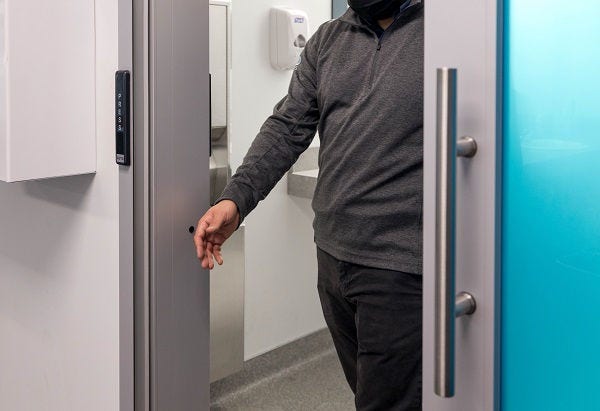
See how our doors solve many challenges.



Want AD Systems in your inbox?
Sign up to receive product updates, news and information from AD Systems sent directly to your inbox.
Let us help.
Contact us today to talk about your project needs, or call us at 425.740.6011.



Ⓒ 2025 Allegion all rights reserved