



















More than Larger Patient Rooms: How Flexible Health Care Design Can Improve Operations
© Alan Blakely Photography
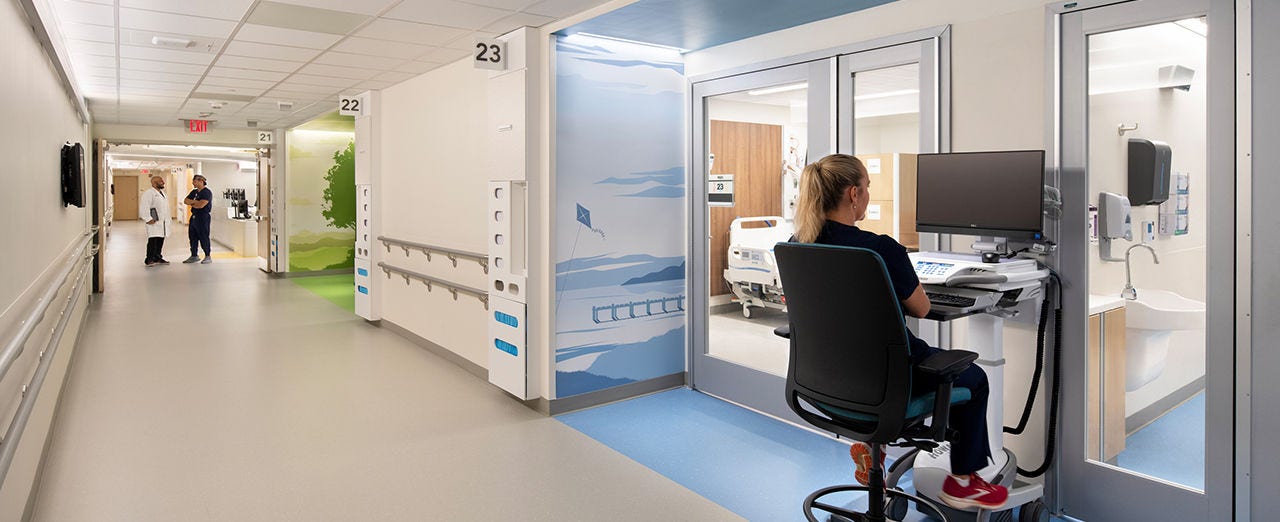
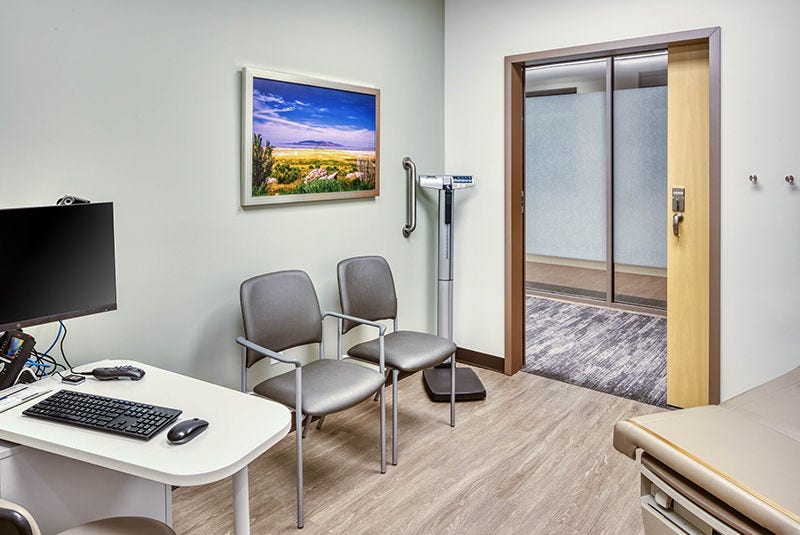
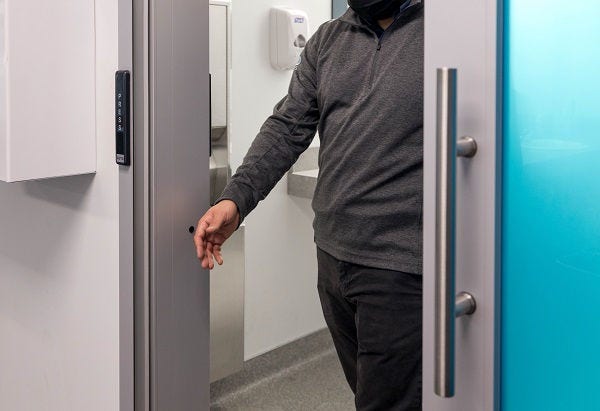
Commercial sliding door systems offer multiple points of value to health care design. They are often considered some of the best door systems for maximizing space in clinics, patient and exam rooms, administrative areas and more. This is because they glide along the wall to eliminate space needed to accommodate swing arc trajectories, freeing up to 30 square feet of usable space per door.
As such, flexible opening door systems’ space-efficient design can contribute to larger patient rooms without reducing their number. However, commercial sliding doors can also contribute to a more flexible health care design.
Flexibly designed medical buildings often see longer service lives since they can adapt to changes in technology and patient needs. Commercial sliding doors can help designers more readily accommodate flexible design.
What are the general advantages of using sliding doors in hospital design?
Aside from maximizing useable square footage and supporting flexible health care design, sliding doors can achieve wider openings without having to accommodate larger swing arcs. Whether standard sliding doors or telescoping systems are used, designers can expect to more readily achieve opening and maneuvering clearance dimensions for a wide range of room uses—making them especially well-suited for meeting accessibility requirements outlined in the Americans with Disabilities Act standards (ADA).
Further, high-quality sliding doors can support acoustic isolation to protect privacy. For example, AD Systems’ ExamSlide™ can achieve Noise Isolation Class (NIC) ratings of up to 39. This means the door can dampen up to 39 decibels when installed to mitigate noise pollution, a key challenge in intensive care units.
How does flexible health care design benefit patients?
In addition to extending the viable service life of a medical center, flexible design supports patients in day-to-day operations and during extreme events.
First, flexible openings can more easily accommodate wider-than-minimum opening dimensions. According to Nathan Murray, design partner and Vice President at TSA Architects, over the past 25 years, desired door clearances have gotten wider “to support the movement of people in wheelchairs or with other mobility aids.” Flexible openings helped Murray’s firm accommodate wider clearances in a recent cancer center renovation without sacrificing space efficiency.
Further, optimizing patient room design can support planning for overflow space in corridors during patient surges as well as increase the number of possible exam rooms within a given footprint. More useable square footage increases the amount of programming possible during normal operation. It also supports a medical center’s ability to handle surges in patients without compromising quality of care.
Flexible health care design also supports providers
Health care facilities designed to adapt can also support medical professionals. On the large scale, because flexible health care design supports long-term viability, there can be less disruptions due to renovations and rebuilds. This helps ensure medical professionals can provide consistent care.
Flexible health care design also allows providers to more readily provide specialty care. For example, the renovations to the pediatric intensive care unit (PICU) at Atrium Health Levine Children's Hospital uses DualSwing™ to create openings that help facilitate the easy transport of patient beds and large medical equipment. The ability for these doors to flex into wider openings support medical providers in better serving high acuity patients—whether that is bringing care to them or comfortably transporting them to specialty wings.
Flexible openings maximize value across several metrics
Commercial sliding doors and other flexible openings optimize floorplans and increase the amount of flexibility within a health care design. Select systems can also contribute durability, premium acoustic performance, multiple design options and much more. As a result, they can deliver a significant amount of value to a project.
But not all flexible opening solutions are the same. When specifiers work with AD Systems, they get more than a door provider. They get a team of experts and a wealth of online tools and resources to help them make the best choices for their project goals. As a part of Allegion’s network of brands, when design firms plan project meetings, AD Systems can support them with recommendations for exterior doors, facades, locking hardware and other architectural systems.
Contact AD Systems today to start designing more flexible health care facilities.
You May Also Like
Check out similar product solutions.
Read about our products in the real world.
See how our doors solve many challenges.




Want AD Systems in your inbox?
Sign up to receive product updates, news and information from AD Systems sent directly to your inbox.
Let us help.
Contact us today to talk about your project needs, or call us at 425.740.6011.



Ⓒ 2025 Allegion all rights reserved