



















Durability, Flexibility and Beauty: Commercial Sliding Doors in Offices
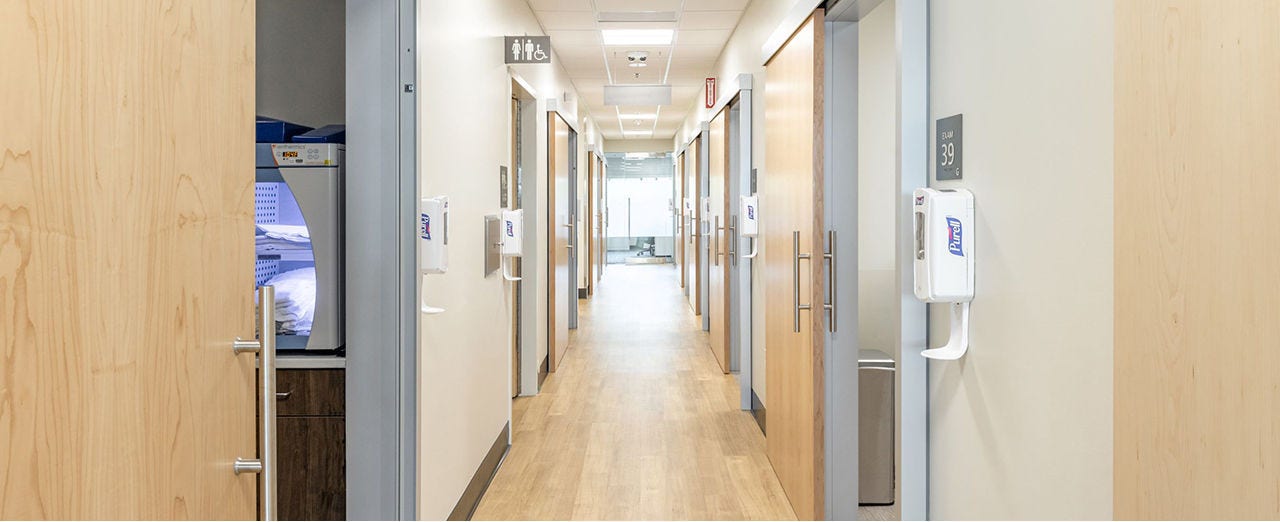
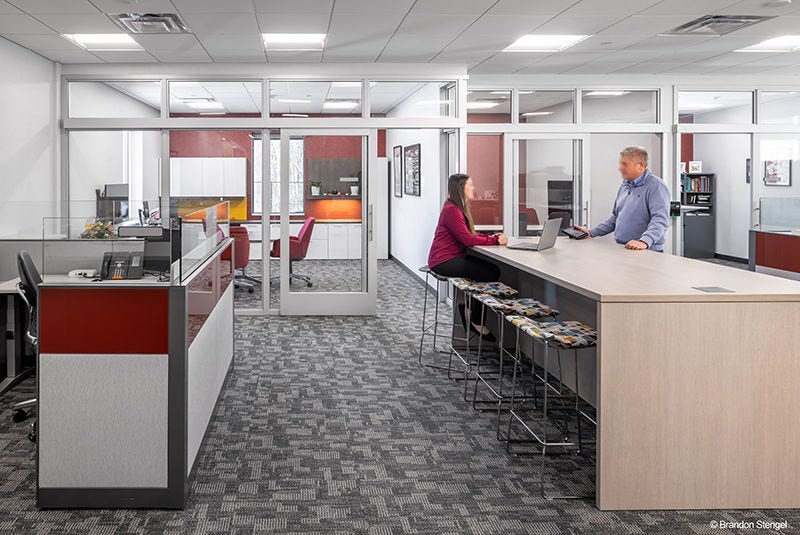
Office space design has shifted greatly over the years—from closed-door nooks to open floorplans, from increasing daylight access to carefully considered color schemes. It is no easy task to design an office that prioritizes occupant engagement while maintaining comfort and productivity.
Further complicating office design, retrofitting buildings into modern workspaces often challenges designers with space constraints, imperfect construction and floorplans that are not directly translatable to a functional office.
While each element of the built environment can contribute to an efficient and engaging office space, doors, specifically commercial sliding doors, provide significant value in realizing a modern workspace design. These flexible openings allow architects to:
1. Design with flexibility in mind
2. Readily accommodate Americans with Disability (ADA) requirements
3. Prioritize both aesthetics and functionality
4. Maximize investment by reducing maintenance costs
1. Design flexibility into the office with commercial sliding doors
It is often cited that flexible design, which is the ability for the built environment to adapt to changes in use and need, can contribute to longer lasting—and greener—buildings. While many parts of the built environment contribute to flexibility, doors remain a key element for incorporating this approach into new builds and retrofits alike.
Commercial sliding doors eliminate the need for swing arc trajectories, so they can be made larger without requiring additional square footage for use. Whether it is an oversized, full-lite glass door or a telescoping option, commercial sliding doors allow designers to blur boundaries between rooms, allowing meeting spaces to overflow into adjacent areas or be closed off to mitigate distractions.
2. Specify ADA sliding doors to support accessibility
Office sliding doors in modern workspace design support a wide range of benefits for the building overall, but they can also have direct and tangible benefits for occupants, including those with disabilities.
Nearly all commercial buildings are required to follow ADA requirements to some extent—the degree to which largely depends on occupancy type, location and size. ADA-compliant sliding doors support more accessible designs by utilizing hardware that is easy to use, reducing approach and maneuvering clearances and even minimizing operating force for large doors with automatic opening options.
3. Create a unique layout that supports productivity
While the operation of commercial sliding doors can support several goals in workspace design, the materials are just as important. For example, the design firm, Shive-Hattery, Inc., understood the benefits of sliding glass doors in an office’s renovation. OfficeSlide™, the full-lite glass doors used in Peoples Bank, supported a brighter, more visually appealing design by complementing access walls and promoting a sense of visual openness.
Further, the AD Systems sliding doors used throughout the building offered acoustic privacy to safeguard sensitive information. Don Duncan, one of the architects heading the project, states, “We have not found another provider to match the acoustic privacy of these sliding doors.”
4. Maximize investment with premium commercial sliding doors
Although all commercial sliding doors can support the functional and aesthetic goals of today’s workplaces, it is important to note not all doors are the same. Options from AD Systems come with high-quality hardware and components that are tested to over 150,000 cycles. They are also available with back track systems that can accommodate and correct real world construction.
The proven durability of these systems represents a significant return on investment by reducing maintenance, repair and replacement costs over the lifetime of the door. In fact, of the commercial sliding doors used in Peoples Bank, Duncan states that they “deliver so much value they were never value-engineered out.”
Office sliding doors promote a modern workspace design
Commercial sliding doors can support several different design goals in office buildings. Space-efficient, durable and adaptable, these flexible openings can help workspaces stay functional and relevant, even as preferred designs shift. When architects and specifiers select high-quality commercial sliding doors that are installed professionally, they can help create offices that prioritize occupant engagement.
Sliding doors and other flexible opening systems from AD Systems have been designed and tested to ensure durability and accessibility. Further, AD Systems offers a variety of finish options—from flush wood to markable surfaces, glass and more—to help meet the aesthetic goals of nearly any project.
You May Also Like
Check out similar product solutions.
Read about our products in the real world.
See how our doors solve many challenges.



Want AD Systems in your inbox?
Sign up to receive product updates, news and information from Ives sent directly to your inbox.
Let us help.
Contact us today to talk about your project needs, or call us at 425.740.6011.



Ⓒ 2025 Allegion all rights reserved