



















Integrating Sliding Door Systems in Modern Commercial Spaces
Sliding door systems can help designers plan space-efficient and flexible commercial buildings by eliminating swing arc trajectories and offering premium acoustic isolation. Their performance capabilities are especially valuable as businesses continue to renovate their office spaces to meet hybrid work schedules.
But the value of commercial sliding doors goes beyond their functionality. These door systems can also provide a host of aesthetic benefits to offices as well. To maximize the use-value of sliding door systems, it is important to consider the specific functions, aesthetics and performance capabilities a commercial project may ask of these doors. While the benefits of integrating commercial sliding doors into a project can vary significantly, the following are often cited as common reasons to specify flexible openings.
Create acoustically isolated customer meeting rooms with commercial sliding doors
Because select sliding door systems can be specified with perimeter and drop-down seals, they can achieve Noise Isolation Class (NIC) ratings of up to 39. This means that they have been field tested to reduce sound transfer between adjacent spaces by dampening up to 39 decibels, which can represent turning a conversation at normal volume in one room to a whisper in a neighboring one.
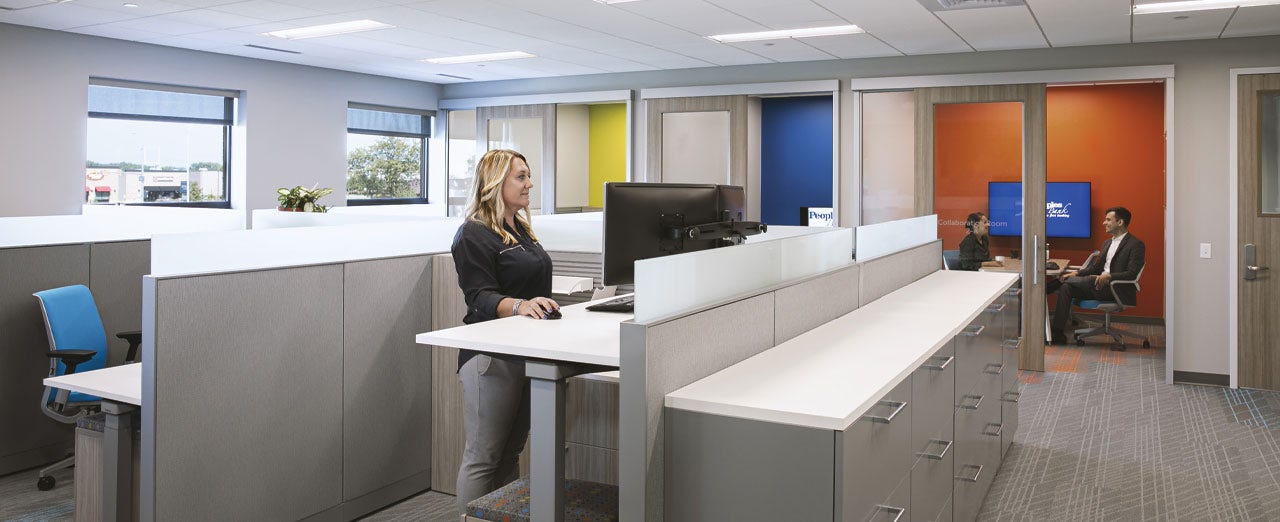
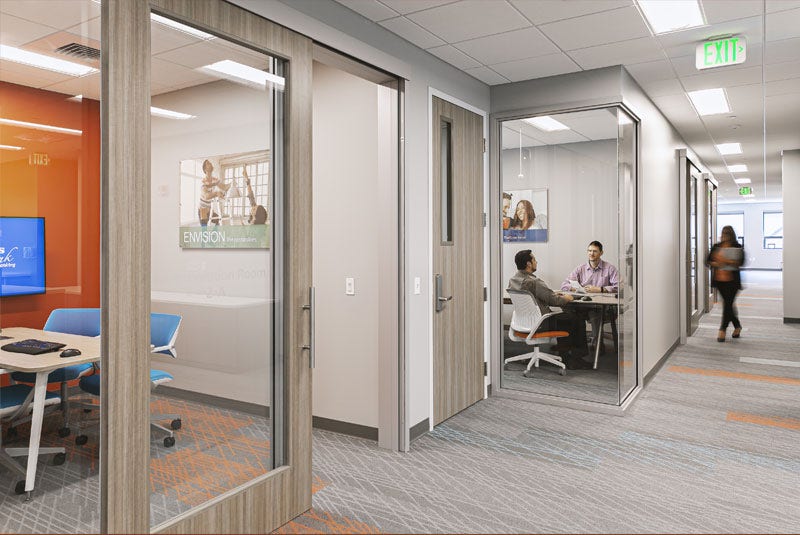
For commercial spaces, this can help facilitate semi-private collaboration spaces for small meetings or calls with clients. As an example, the architects behind Peoples Bank in Munster, Ind., specified AD Systems’ OfficeSlide™ sliding door system to both preserve navigability along a narrow hallway and facilitate spaces for employees and customers to discuss potentially sensitive financial documents. The design team chose a full-lite sliding door configuration to maintain visual connection and to showcase the spaces’ brightly colored accent walls—blending form and function with one door system.
Use custom door surfaces to give conference rooms a pop of color
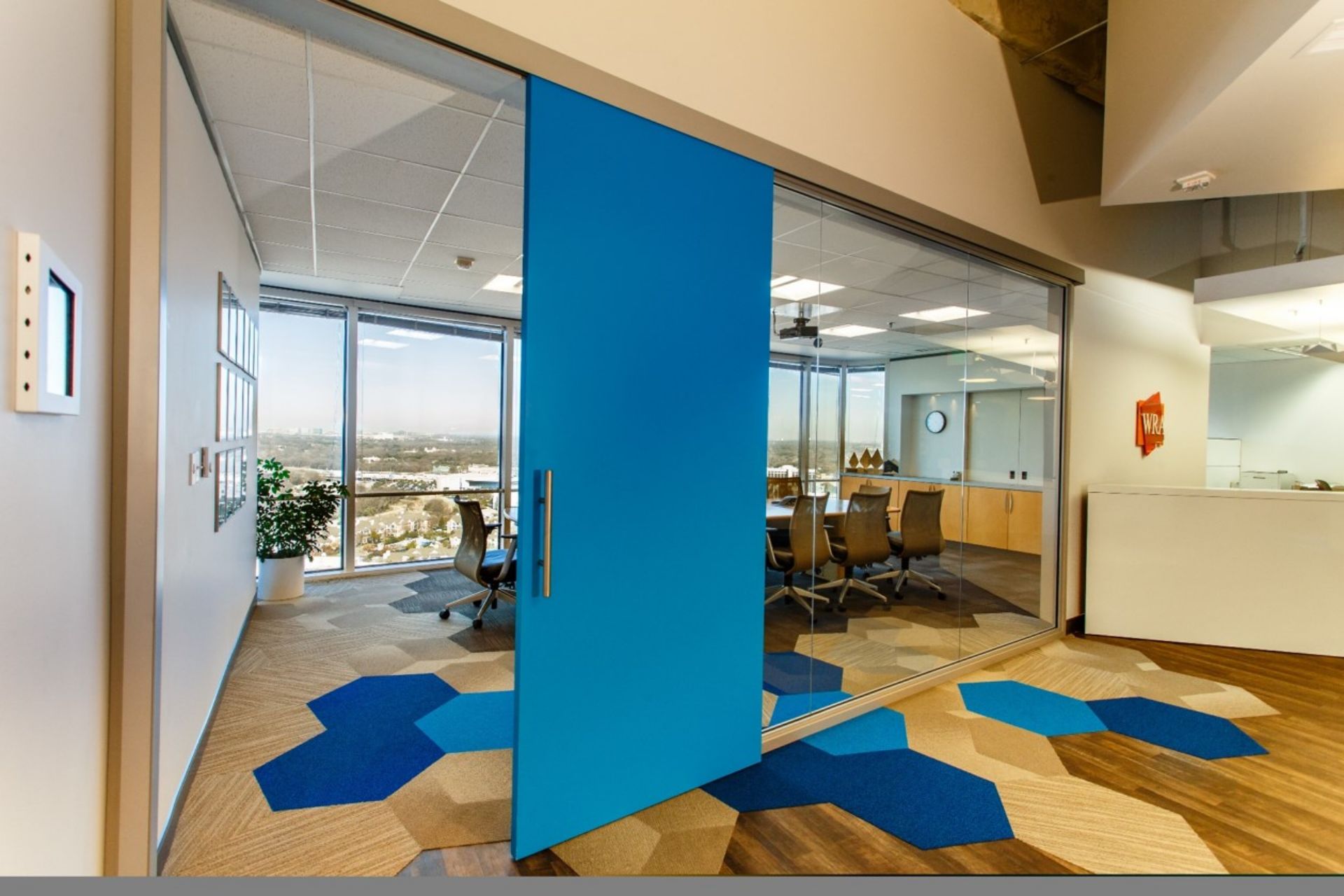
Combining full-lite commercial sliding doors with accent walls is not the only way to add color to an office. These doors can also be finished with a variety of surface treatments—from laminated graphics to wood grains, from etched glass to blocks of solid color.
On the one hand, designers can use these surface treatments to indicate different uses or departments while maintaining a cohesive and overarching aesthetic. On the other, they can specify a bold door color as a distinct design element. This can change the look and feel of a space as well as work with the tenets of color psychology to support employee comfort and productivity.
Visually connect enclosed offices with glass sliding door systems
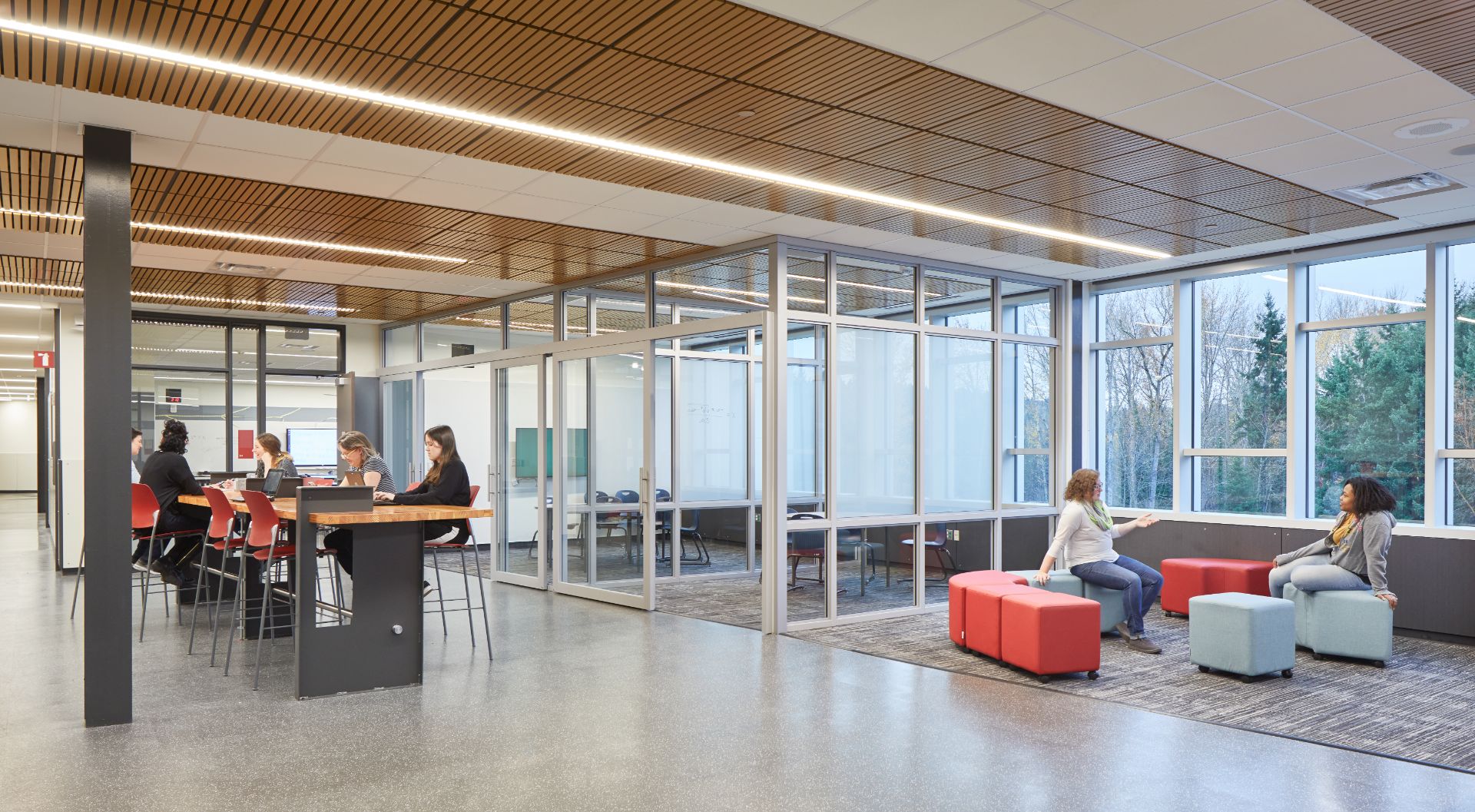
Designers can enhance the visual connection of a full-lite commercial sliding door with glass wall assembly. This configuration has been used in wellness centers and schools to create a space within a space. Commercial projects can utilize glass walls with full-lite or flush wood door leaves to open meeting rooms and areas for concentrated work without also inviting the distractions that are often inevitable in an open office floorplan. Glass walls and flexible openings strike a balance between inviting collaboration and maintaining optimal conditions for solo work. This supports a more flexible office design.
Improve accessibility with hardware and reduced approached clearances
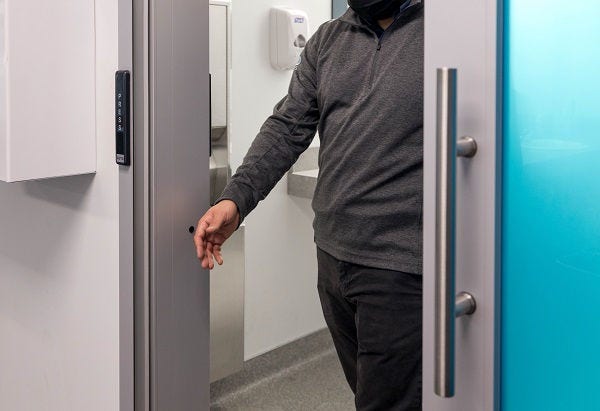
In addition to aesthetics and functionality of spaces, commercial sliding doors can also contribute to a more accessible office. While Americans with Disability Act (ADA) requirements can vary based on a business’s purpose and operation, specifying doors with accessible hardware and easy operation can help create a climate of inclusivity in any space.
While several door types can support accessibility goals, sliding door systems, in particular, reduce approach clearances, which can make operation easier for those with limited mobility. Further, automatic operators can ease opening force requirements while also improving security and ease of movement between spaces. In these applications, designing for accessibility can help improve the functionality of a space for many types of personal ability.
Commercial sliding doors help solve office design challenges
Supporting a range of design aesthetics and functional demands, sliding door systems can help architects and specifiers meet and exceed occupant expectations. However, not all commercial sliding doors are the same.
To ensure these doors contribute the most value to a project, it is important to work with manufacturers with a long and proven track record. Doing so will not only help designers find the right products for their projects but also could result in custom solutions to solve project-specific challenges.
You May Also Like
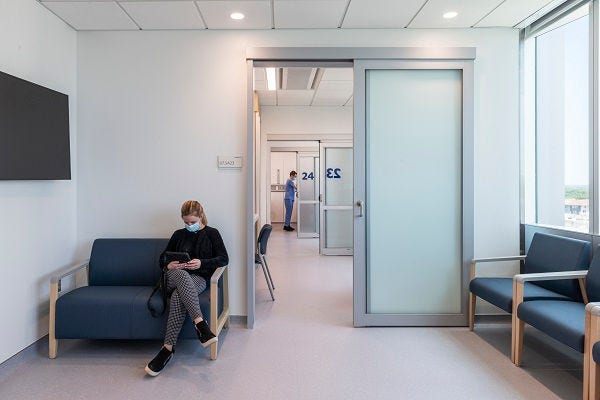
Check out similar product solutions.
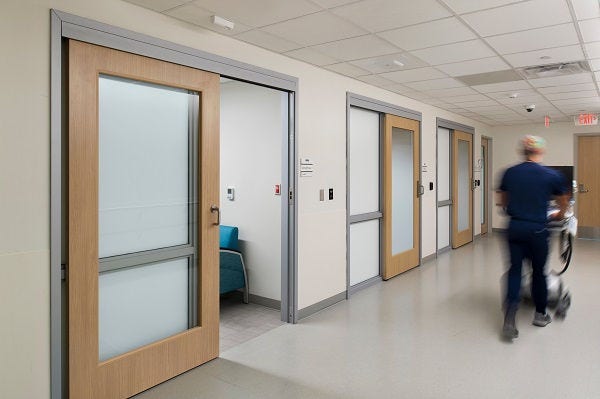
Read about our products in the real world.
See how our doors solve many challenges.



Want AD Systems in your inbox?
Sign up to receive product updates, news and information from Ives sent directly to your inbox.
Let us help.
Contact us today to talk about your project needs, or call us at 425.740.6011.



Ⓒ 2025 Allegion all rights reserved