


















Beyond HIPAA: How Acoustic Sliding Doors Imprive Privacy and Wellness in Health Care Settings
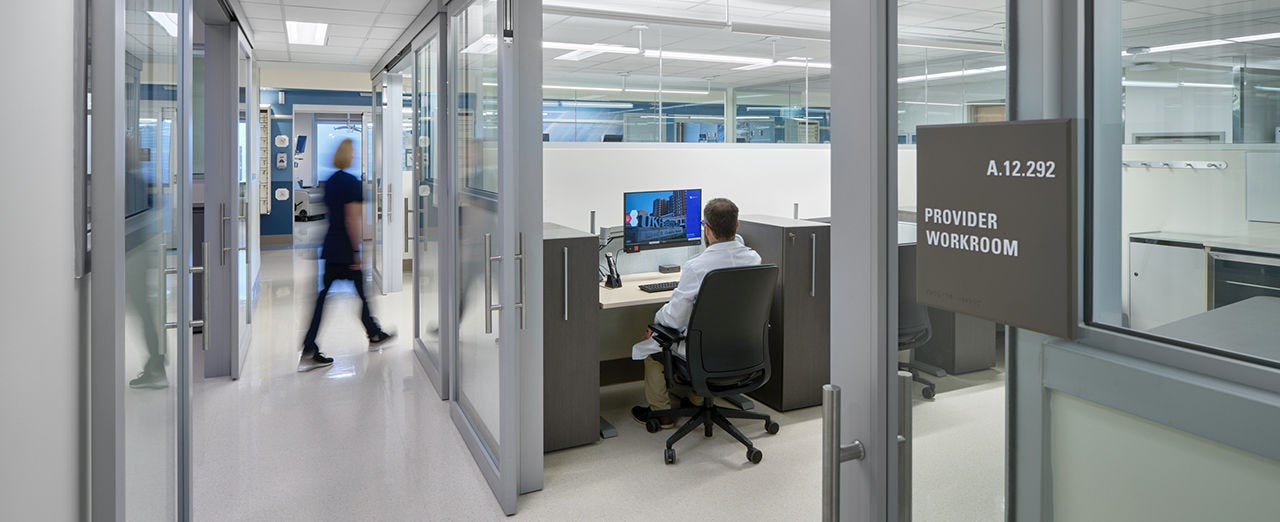
The Health Insurance Portability and Accountability Act (HIPAA) may require multiple precautions for physical spaces to safeguard the confidentiality of patient information. While there are multiple routes to take to meet HIPAA standards, premium sound attenuation in certain areas of a medical center can contribute to a robust HIPAA compliance program.
That said, for health care facilities, privacy extends beyond HIPAA compliance and can support both patients and providers in positive ways. Acoustically designed interiors help reduce overall floor noise, contribute to more peaceful areas and minimize distraction within provider spaces.
In terms of design, acoustic sliding doors can play a critical role when it comes to mitigating noise transfer across multiple health care projects. This blog will explain not only how these doors work, but also what providers can expect when they specify high-performing acoustic sliding doors.
How do acoustic sliding doors improve privacy?
Acoustic sliding doors use perimeter and drop-down seals to reduce the amount of sound that transfers between spaces. Their ability to limit transfer is often measured according to Sound Transmission Class (STC) or Noise Isolation Class (NIC) ratings. STC is conducted in lab conditions, whereas NIC is a field test. Both ratings show how many decibels a door can block in its respective setting.
For example, ExamSlide™ from AD Systems can achieve an NIC rating of 39, which means it can dampen up to 39 decibels of sound. As such, this acoustic sliding door system can reduce the decibel level of a normal conversation on one side of the door to a whisper on the other. This can support patient-provider privacy during exams as well as reduce accidental disclosures during collaborative work.
Manage alarm fatigue and provider burnout with acoustically isolated respite areas
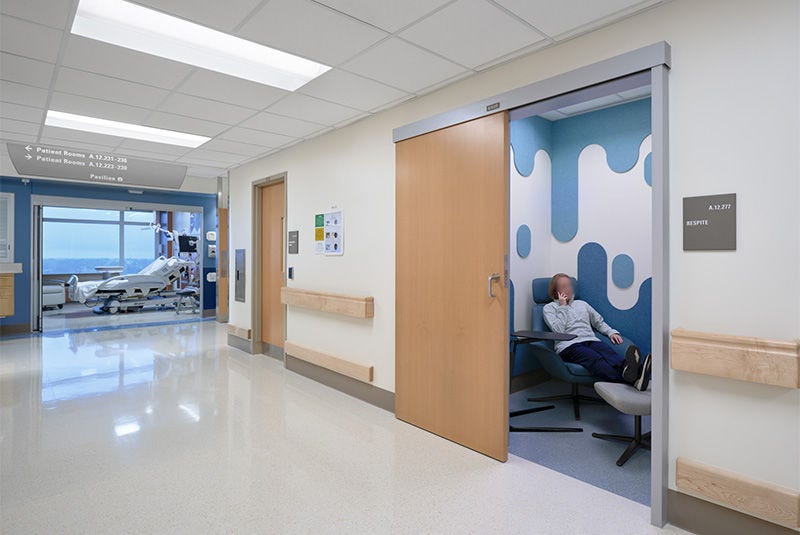
Sound attenuation goes beyond privacy to support provider wellness. This is particularly true for spaces designed for providers to rest during long shifts. By limiting the amount of noise that enters these rooms, acoustic sliding doors help ensure that providers can rest and recharge so they can stay alert.
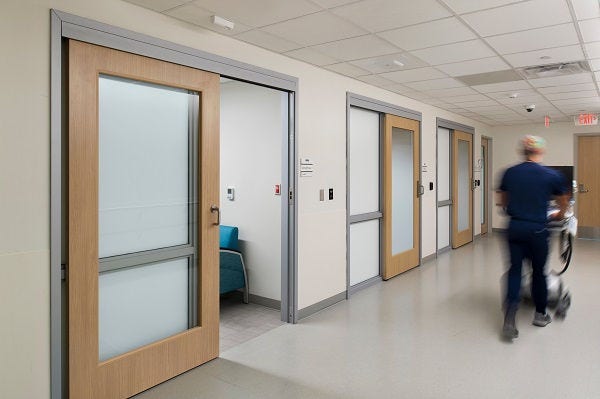
Sound attenuation was a deciding factor in the recent renovation of the University of Kentucky’s Albert B. Chandler Hospital intensive care unit (ICU). In this project, the design team chose ExamSlide for provider respite areas. The door system saves corridor space by offering premium sound attenuation and easily incorporating locking hardware to ensure privacy. These qualities work together to reduce alarm fatigue and provide a safe place for providers to rest and reflect without concerns about someone walking in.
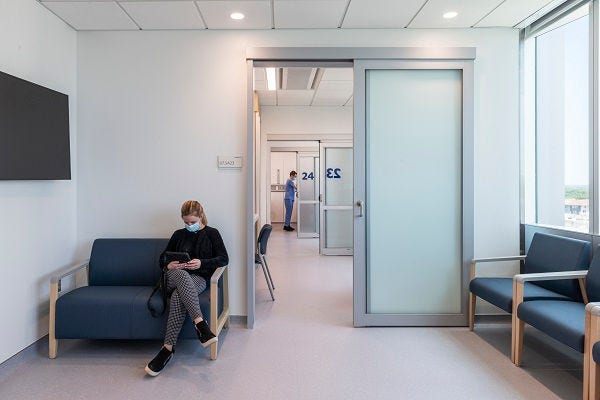
While acoustic performance is essential for respite areas, it can also be beneficial in workstations and in patient areas. Acoustic sliding doors limit sound transfer between rooms to reduce the overall noise level on a floor—a key consideration given recent data indicates most health care settings often exceed recommended ambient noise levels.
Can soft-close technology in sliding doors contribute to quieter health care facilities?
Sliding doors can facilitate a quieter built environment beyond acoustic isolation. Soft closing technology prevents a sliding door system from slamming. These components slow the door’s motion in the last few inches of its closing using either fluid or oil dampeners or other dampening action. This can, in turn, contribute to lower ambient noise levels across an entire floor.
The benefits of soft-close technology in sliding doors extend beyond supporting quieter medical centers. Soft-close systems reduce wear and tear on doors to extend their service life and minimize the cost of routine maintenance.
Health care design can have multiple challenges and solutions
Planning for acoustically isolated interiors is just one of the many goals in health care design. Meeting code requirements, ensuring a functional and welcoming atmosphere, providing intuitive wayfinding and more can all create tensions in the design and construction process.
Many of these tensions center around openings and can require different door systems depending on location and intended use. To streamline both the specification process and maintenance, project stakeholders are encouraged to work with a single door manufacturer that offers a wide range of flexible opening solutions and has a proven track record.
You May Also Like
Check out similar product solutions.
Read about our products in the real world.
See how our doors solve many challenges.




Want AD Systems in your inbox?
Sign up to receive product updates, news and information from Ives sent directly to your inbox.
Let us help.
Contact us today to talk about your project needs, or call us at 425.740.6011.



Ⓒ 2025 Allegion all rights reserved