



















Sliding Door Forecast: Glass Options Expand Design Flexibility
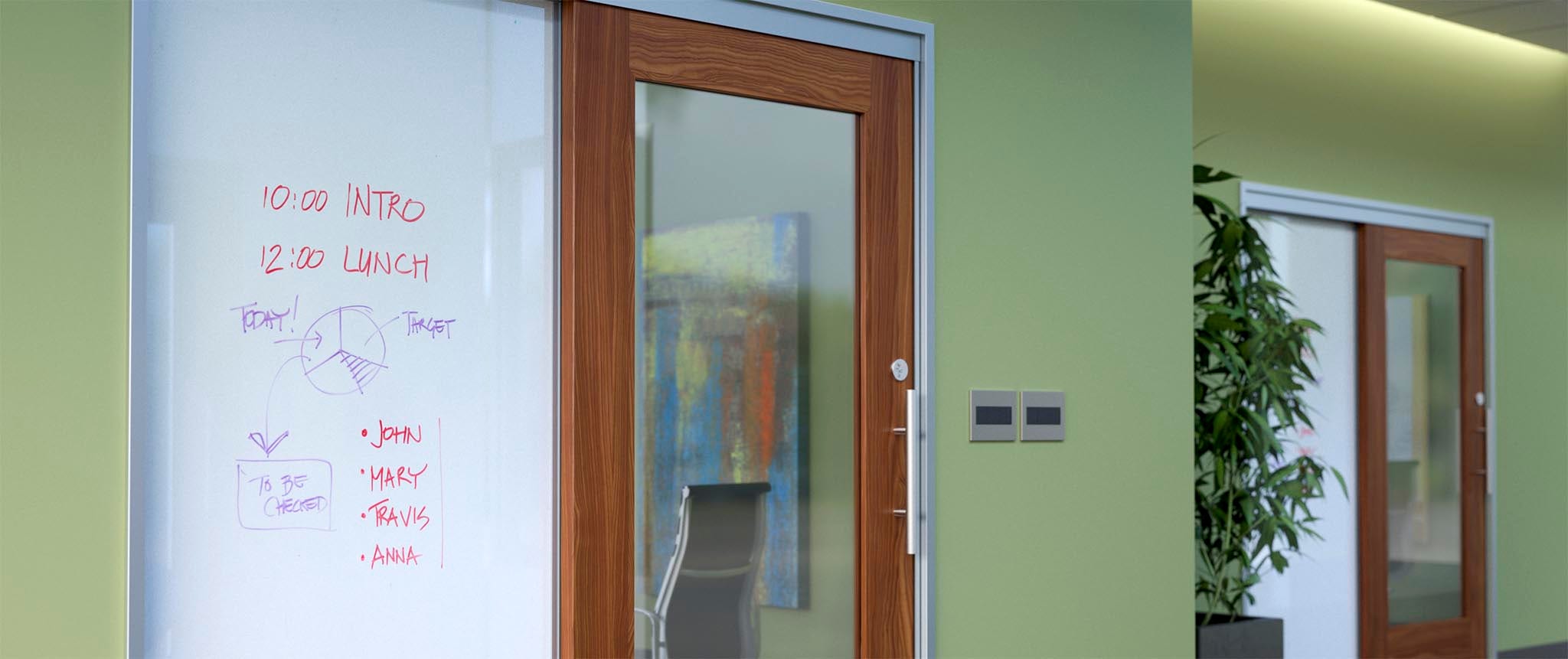
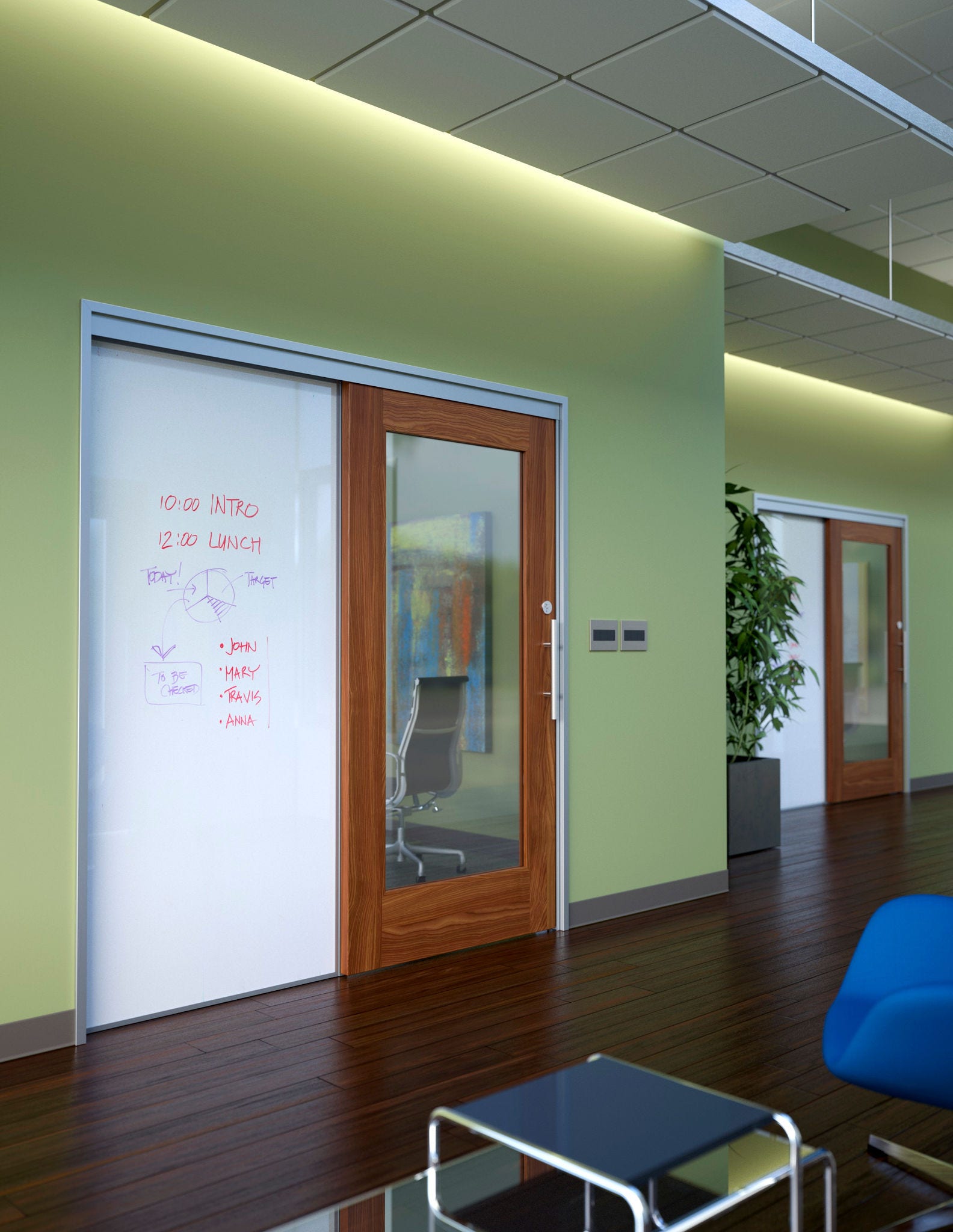
Commercial sliding doors can save space, improve wayfinding and offer hands-free operation. When specified with glass, these doors can also encourage visual connection between spaces and promote the use of natural light. Further, because commercial sliding glass doors are available in a variety of glazing options, they allow architects the design flexibility to specify a stunning door with materials that suit specific project needs.
For example, some options, like glass markerboard, support collaborative and adaptable layouts while others, like frosted glazing, allow for more privacy without completely blocking light from a building’s interior. No matter what the building’s purpose is, the range of choices available ensures there most likely will be a sliding glass door design that fits the requirements. The following examines some of the options available and how they can support thoughtfully designed spaces.
Improved visual connection and light transfer
When design professionals think of commercial sliding glass doors, they may envision a simple perimeter frame surrounding a clear pane of glass. Manufacturers like AD Systems have now upgraded this basic design option with a slender, yet durable aluminum perimeter framing system that matches the surrounding door assemblies and showcases large lites of glass. These sleek sliding glass doors provide a subtle and sophisticated way to promote visual connection between rooms and support daylighting goals, which aids occupant wellbeing no matter the space’s use. Additionally, where greater daylight and transparency is desirable, such as collaboration cubes, this option can be specified with sidelites, transoms or a bi-parting pair of sliding doors.
Clear sliding glass doors also have an added design benefit: they can make a space appear larger, much like exterior windows. Select manufacturers have developed frames that support larger spans of glass to improve views and help ensure commercial sliding glass doors are wide enough to meet ADA accessibility requirements. Though offering understated elegance, a clear pane of glass inside an aluminum frame may not work for every space.
Commercial sliding glass doors balance privacy and daylighting
Not all building projects need glass doors to increase visual connectivity and openness between spaces. Sometimes, this may in fact be the opposite of what is desired. To support daylighting goals without sacrificing privacy, frosted glass can be an ideal solution. It diffuses soft, even light while preventing unwanted eyes from peering into the space behind it.
Where even more privacy is desirable, design teams can consider opaque glass or flexible options such as switchable privacy glass or integral blinds. Switchable privacy glass can turn an open design into a more confidential space with the press of a button. Integral blinds are louvers placed between hermetically sealed panes of glass. They can be positioned to permit vision and light into one area and limit it in the opposite direction without the use of cords or added maintenance.
With both options, building occupants can have privacy when they need it and a more open design aesthetic when they do not. Furthermore, all options work with noise reducing gaskets to help commercial sliding glass doors ensure confidentiality in healthcare facilities or to reduce distractions in schools.
Different surfaces offer variation within an overarching design aesthetic
Beyond frosted and privacy glazing, sliding glass doors can also be fitted with markable surfaces to help students—and anyone else—collaborate. Glass markerboard can provide a physical space for groups to synthesize their ideas and work toward a solution to whatever problem they have been tasked to complete. Alternatively, for multifamily residences, they can also allow occupants to leave messages or temporarily decorate, adding personal flair to their doors.
In addition, commercial sliding glass doors can be laminated with graphics. Using graphics on doors can help healthcare facilities, businesses and schools improve wayfinding for visitors without sacrificing an overarching design aesthetic. Different grade level areas or department floors may feature a specific graphic within a repeated sliding door assembly to help visitors find their way without consulting a map.
Further, pediatric offices could use playful graphics to create a softer, more kid-friendly atmosphere. Incorporating a Shel-Silverstein-esque drawing or a lush jungle scene would breathe a little fun into the clinical environment of a doctor’s office to make it more inviting for the patients.
Commercial sliding glass doors offer purposeful flexibility
All the above options can help elevate the design aesthetic of any given building both now and in the future. While the flexibility of sliding glass doors can support specific building functions, it can also meet commercial buildings’ ever-changing design needs. Whether it is privacy that allows access to natural light, adaptable workspaces or increased collaborative surfaces, commercial sliding glass doors can be an ideal solution. Because manufacturers like AD Systems work with owners, architects and contractors to meet job specific requirements and designs, they can help create custom sliding door systems that provide innovative solutions.
You May Also Like
Check out similar product solutions.
Read about our products in the real world.
See how our doors solve many challenges.



Want AD Systems in your inbox?
Sign up to receive product updates, news and information from Ives sent directly to your inbox.
Let us help.
Contact us today to talk about your project needs, or call us at 425.740.6011.



Ⓒ 2025 Allegion all rights reserved