
The Future of Flexible Healthcare Design: Patient Room Door Trends

Allegion's Commercial Family of Brands


















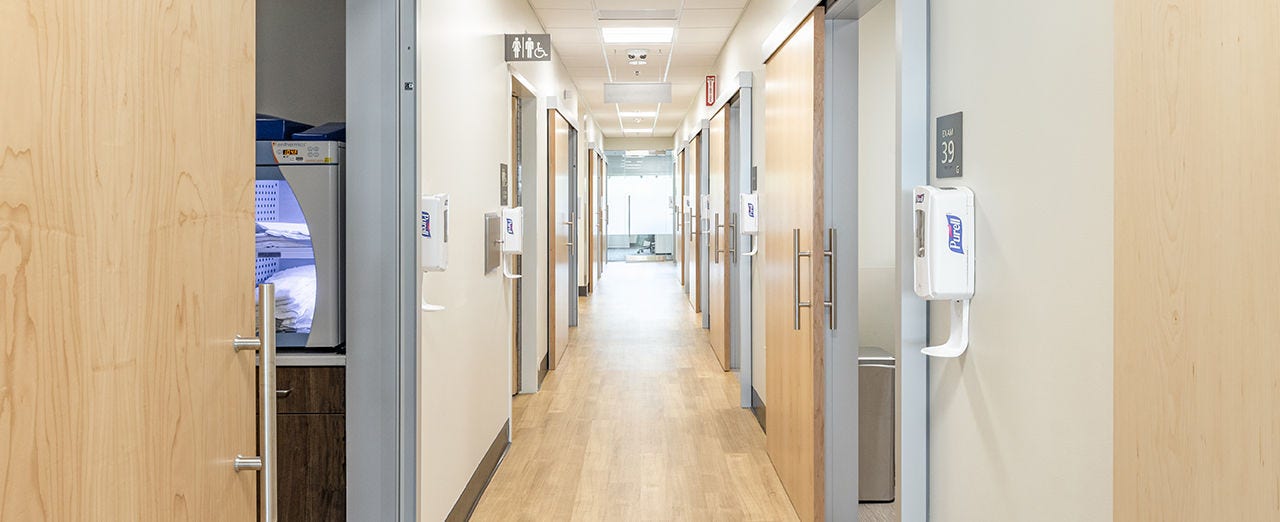
Healthcare has gone through many changes in recent years. With those changes comes new challenges in designing healthcare settings. This also creates the opportunity to meet today’s needs while keeping an eye toward the future by planning for more flexible spaces.
But what are today’s healthcare design trends and how do patient room doors play a role in meeting current and future needs? This Q+A with Tysen Gannon, LEED AP (BD+C), will explore not only what best practices are currently influencing healthcare design but also why planning for these goals can help provide long-term viability to medical providers and the communities they serve.
How has healthcare design changed in the past year?
The ongoing impact of the pandemic on construction and budgets has influenced design trends over the past couple years. The significant hit to outpatient revenues during the pandemic coupled with greater costs during that time and significant inflation and construction delays have been extremely challenging for providers, especially small or rural hospitals.
These trends make efficient design and construction paramount, and we see a continuing trend towards more services being delivered in outpatient settings. This means there is a need for spaces to be flexible to accommodate multiple or unforeseen needs—and with the need for flexibility often comes the need for more flexible openings, including patient room doors.
What other considerations are influencing patient room door specifications?
Patient room door specifications seem to be trending towards larger openings in more areas and more universal design. These trends support both accessibility accommodations and a more flexible building design overall.
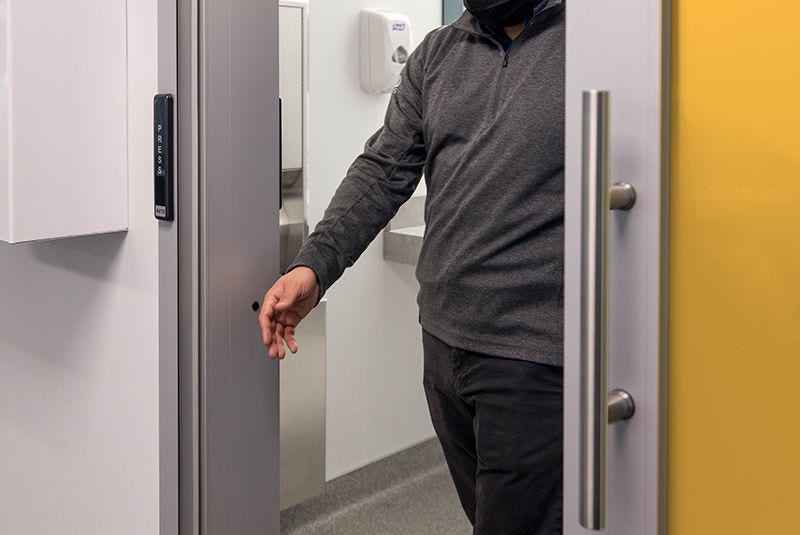
There is also increasing use of automation for accessibility, usability and infection control purposes. When these considerations guide the decision to use automatic doors, it is important to understand whether low-energy or high-energy operators will be suit an application.
Finally, access control is becoming more prevalent in more areas. The need to accommodate behavioral health patients in both behavioral health and ER, Urgent care or typical inpatient settings, can also have a significant impact on patient room door design.
How do sliding doors meet the current challenges in these occupancies?
Sliding doors help architects and facilities design and use space very efficiently. With the economic pressures provider organizations are facing, sliding doors can help them maximize the utility of their exam room or building footprint by eliminating wasted space (allowing them to incorporate more exam rooms into the same building, minimize the space needing for a restroom and more).
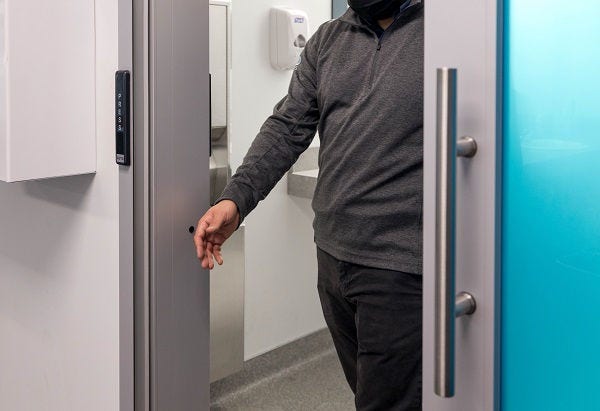
Sliding doors offer remarkably more features than they did just a few years ago. With options such as smoke ratings, fire-ratings, access control and bed lift integration and affordable low-energy automation, they can be used on many more types of openings such as restroom and patient room doors, improving design efficiency.
In what ways can healthcare projects plan for long-term adaptability and resiliency?
It is hard to look into a crystal ball and know what is coming, but designers and facilities should follow what we know to be best practices by investing in quality products that reduce total cost of ownership for the lifetime of a building. Creating spaces that can flex for specialties or purposes as needs change and accommodate changes in technology is essential for long-term adaptability. Products that have a proven track record and long service life are always good bets in healthcare construction.
The future is flexible
Commercial sliding doors and swing doors with flexible openings can help designers meet building requirements like those outlined in the Americans with Disability Act (ADA). They can also support space-efficient and adaptable building plans.
As such, these door systems can be indispensable as architects and medical providers look to improve the accessibility, usability and long-term viability of their facilities. Able to be used as patient room doors, entrances to administrative areas, lab room doors and much more, sliding doors can deliver significant value to healthcare design today and in the future.
You May Also Like
Check out similar product solutions.
Read about our products in the real world.
See how our doors solve many challenges.



Want AD Systems in your inbox?
Sign up to receive product updates, news and information from Ives sent directly to your inbox.
Let us help.
Contact us today to talk about your project needs.



Ⓒ 2025 Allegion all rights reserved