
5 Benefits of Interior Automatic Sliding Doors

Allegion's Commercial Family of Brands

















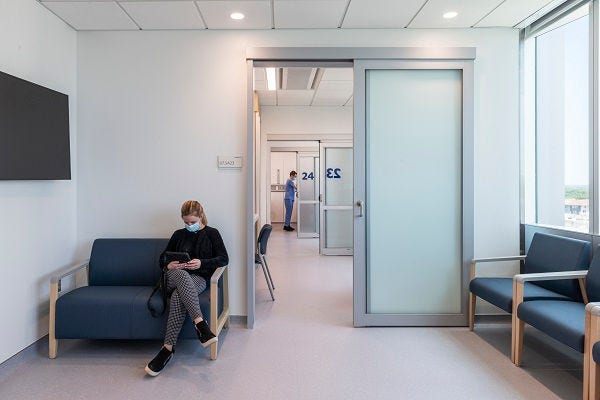
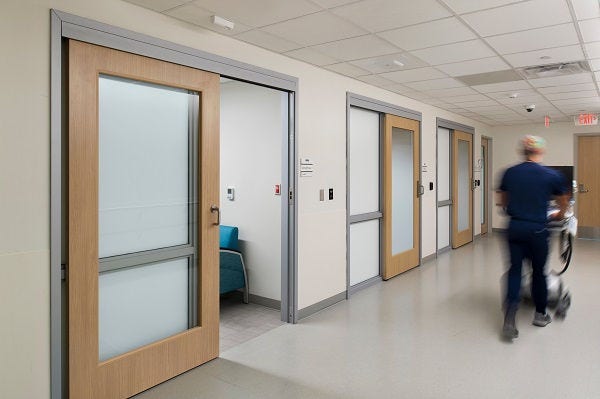
Automatic sliding doors can be found in many types of healthcare settings. Their specification is so prevalent that it might prompt some designers to question are automatic sliding doors required in healthcare design?
The short answer to this question is that they are not a building requirement. The long answer is that automatic sliding doors help specifiers meet several building code requirements while also providing other tangible benefits, including:
1. Easily fulfill the Americans with Disabilities Act (ADA) operating specifications
2. Create more hygienic spaces
4. Provide convenient openings for occupants
5. Reduce contamination risks
1. Easily fulfill ADA operating requirements
The ADA helps ensure buildings are accessible for everyone by requiring specific features throughout the built environment. While some requirements are more recognizable like ramps, others are more subtle—including opening widths, operating force requirements and closing speeds for doors. This leads some to wonder if automatic sliding doors an ADA requirement.
While not technically required by the ADA, interior automatic sliding doors both sideline operating force requirements and close at optimal speeds. Because they don’t need room for swing arc trajectories, they can also be specified in a variety of widths to exceed the minimum requirements without sacrificing usable square footage. Further, because they slide, they drastically reduce approach clearances, making them more accessible for those with limited mobility.
2. Create more hygienic spaces
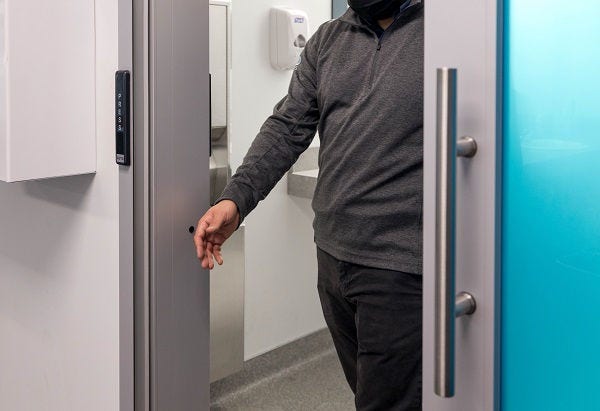
Automatic sliding doors reduce points of contact between building surfaces and occupants to contribute to increased infection control. While this benefits everyone within a building, it is vitally important for those who are immunocompromised.
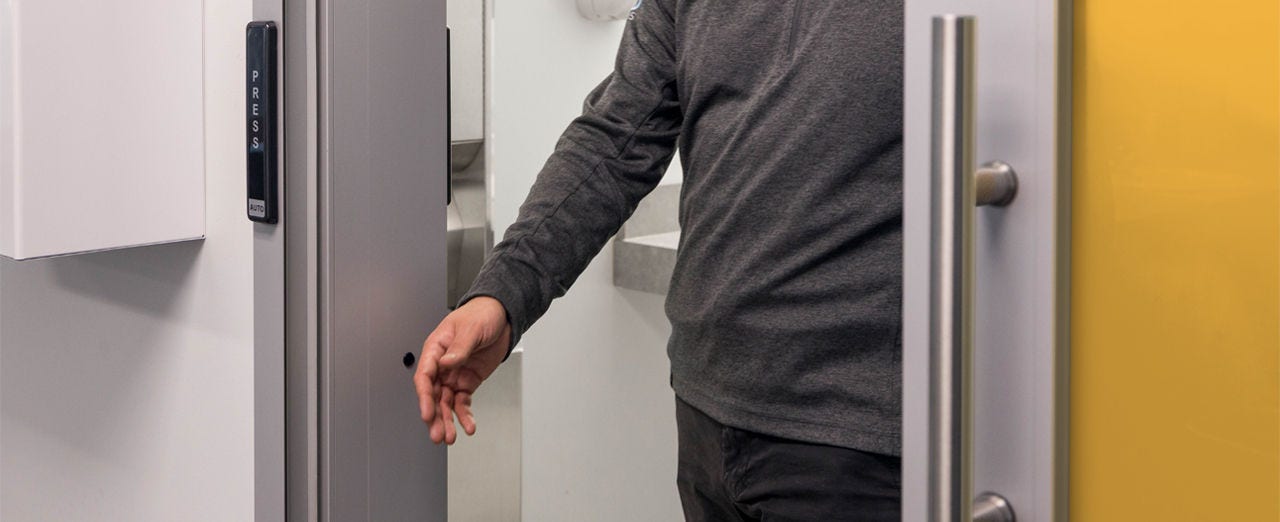
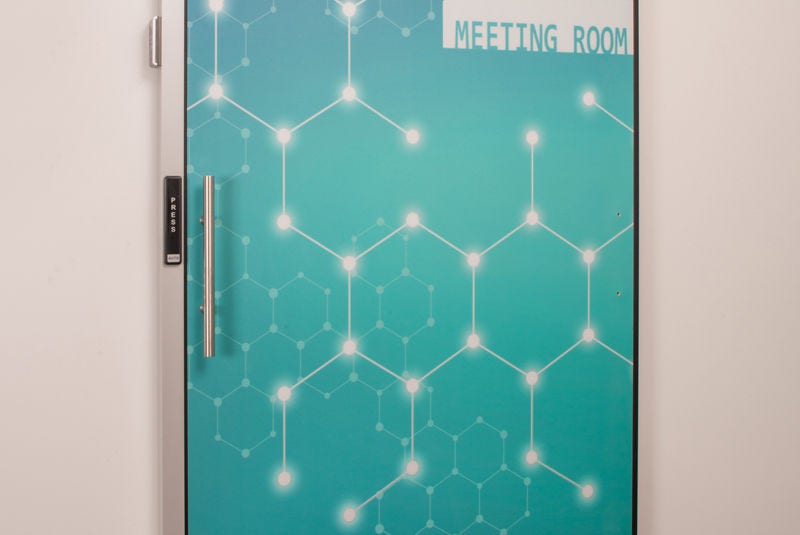
It can also be incredibly beneficial for healthcare settings, where the spread of disease or risk of infection is high. Interior automatic sliding doors can be designed to open with the press of a button, wave of a hand or a number of other activation devices for improved hygiene and flexible access control.
3. Improve building security
Interior automatic sliding doors can also be outfitted with access control systems that employ technologies such as card readers, keypads or mobile credential scanners. Not only can these optional security systems limit access to sensitive materials like pharmaceutical storage areas and places with confidential patient information, but they can also offer usage data to indicate whose credentials were used to access a space within a given time. Both features improve the security a healthcare facility can offer patients and staff.
4. Provide convenient openings for occupants
Because automatic sliding doors offer hands-free operation, they can help anyone within a healthcare setting more easily access different areas. This can ease operation requirements for patients who temporally need mobility assistive devices. For staff, it can be beneficial for those moving large or bulky equipment or cleaning supplies between rooms or wings.
As such, interior automatic sliding doors can help make moving between areas within a healthcare facility more convenient and more efficient, which has the potential to reduce patient wait times and increase the amount of face-to-face time patients can expect from their care providers.
5. Reduce contamination risks for positive and negative pressure rooms
In general, sliding doors have been shown to significantly reduce the risk of contaminating isolation rooms and protective environments when compared to swing doors. They do this by reducing the intensity and direction of air turbulence caused by opening a door in an effort to maintain sterile fields and required pressure differences between these rooms and adjacent areas. However, research also indicates that the risk reduction happens only when doors are opened at a force and speed below certain thresholds.
Automatic sliding doors provide a solution for this, as they can be programmed to open and close at set speeds, sidelining potential user-related failures. This benefit can work with other systems to help healthcare facilities better control infection and contamination risks in both positive and negative pressure rooms.
Automatic sliding doors can offer benefits throughout a medical facility
These five benefits of interior automatic sliding doors are just the beginning. Automatic sliding door systems like AutoMotion can be customized to fit a range of uses and finished to meet several design aesthetics. While they may not be a building requirement, the value interior automatic sliding doors offer can make them practically indispensable for certain applications.
You May Also Like
Check out similar product solutions.
Read about our products in the real world.
See how our doors solve many challenges.


Want AD Systems in your inbox?
Sign up to receive product updates, news and information from Ives sent directly to your inbox.
Let us help.
Contact us today to talk about your project needs.



Ⓒ 2025 Allegion all rights reserved